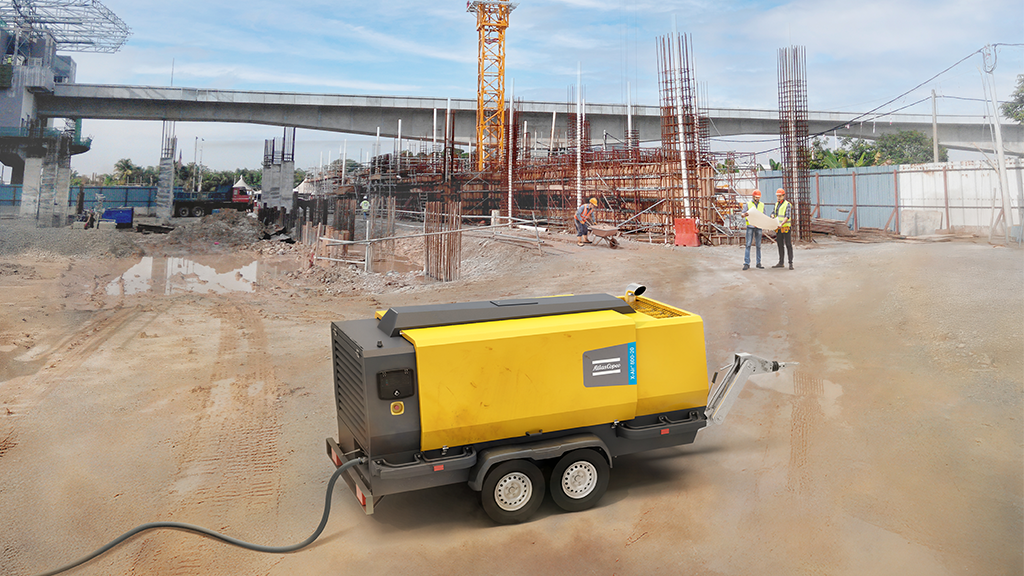

Five cold-weather challenges for portable air compressors
Cold temperatures, moisture, and harsh job site conditions can contribute to equipment wear and unexpected downtime
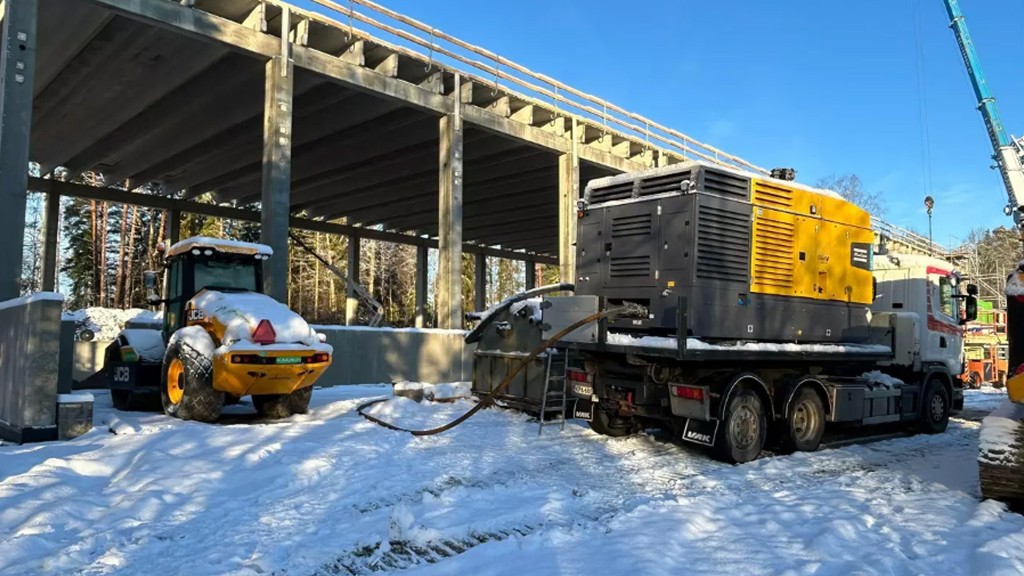
When temperatures drop, construction and infrastructure sites still need reliable compressed air to keep work moving. Operators may assume that antifreeze is enough to protect an air compressor in winter, but cold-weather performance depends on much more than fluid protection. Thickened oil, reduced battery performance, condensation, electronics issues, and harsh job site conditions can all affect airflow, reliability, and uptime.
Atlas Copco, manufacturer of air compressors designed for demanding environments and applications, shares five factors you should consider to keep air compressors running reliably in winter conditions.
Five winter risks affecting portable air compressor performance
1. Cold starts are a mechanical challenge
Antifreeze can help protect fluids from freezing, but it does not change how cold affects mechanical components. In freezing conditions, oil becomes thicker and resists flow. That makes the compressor harder to start and can increase stress on internal parts during startup and warm-up. At the same time, battery performance can drop to the point where the machine struggles to turn over. Block heaters, winter-grade oil, automatic warm-up routines, and cold-start features can help reduce startup stress and protect the compressor as it reaches stable operating temperature.
2. Moisture can freeze where air needs to keep moving
Cold air may be denser, but it also increases the risk of internal condensation. When moisture builds up in lines, valves, or other parts of the system, freezing temperatures can turn it into ice, causing blockages or even damage. That can reduce airflow or stop equipment from working as expected. Engineers should look beyond ambient temperature and consider how moisture behaves inside the system in cold conditions.
3. Air density changes the conditions behind the specification sheet
A compressor's rated output is usually easier to interpret in moderate, predictable conditions. Winter job sites are less predictable. Temperature changes affect air density, and air density affects how a compressor takes in and delivers air. In cold weather, the main issue is not only the density itself, but also the condensation and freezing risks that come with it. Engineers should keep that in mind when selecting a compressor for winter job sites. A unit that performs well in standard conditions still needs to maintain stable pressure and airflow when the environment changes.
4. Electronics need winter protection too
The mechanical parts of a compressor often receive the most attention in winter, but electronics can be just as vulnerable. Moisture, low temperatures, and exposure to the elements can cause control panels, sensors, or electrical systems to glitch or shut down. For portable compressors used outdoors, sealed electronics, weather-resistant housings, and smart diagnostics can make a difference. These systems help protect critical controls and warn operators of overload or freeze risks before they lead to unplanned downtime.
5. Winter jobsites bring more than cold air
Winter conditions also change the environment around the compressor. Salt, slush, mud, dust, and rough terrain can all add stress. Salt particles can accelerate corrosion, and dust and dirt can clog filters and reduce efficiency. Uneven or difficult-to-reach terrain can make transport and positioning harder, especially in remote or rugged environments. Compressors used in these conditions should therefore combine thermal resilience with corrosion-resistant materials, strong filtration, protective canopies, reinforced frames, and mobility features that allow safe deployment where the work takes place.
Atlas Copco portable air compressors are engineered to perform reliably in extreme cold. Built with thermal-resistant components and rigorously tested across a wide range of temperatures, these machines are designed to maintain performance, efficiency, and safety even in harsh winter conditions. Their durability helps keep critical job sites running when cold weather poses challenges for equipment and operations.