

U.S. construction spending expected to reach $2.85 trillion by 2031, driven by key markets
A recent report from Merlo America helps identify where opportunity is emerging and allows contractors and dealers to plan with confidence
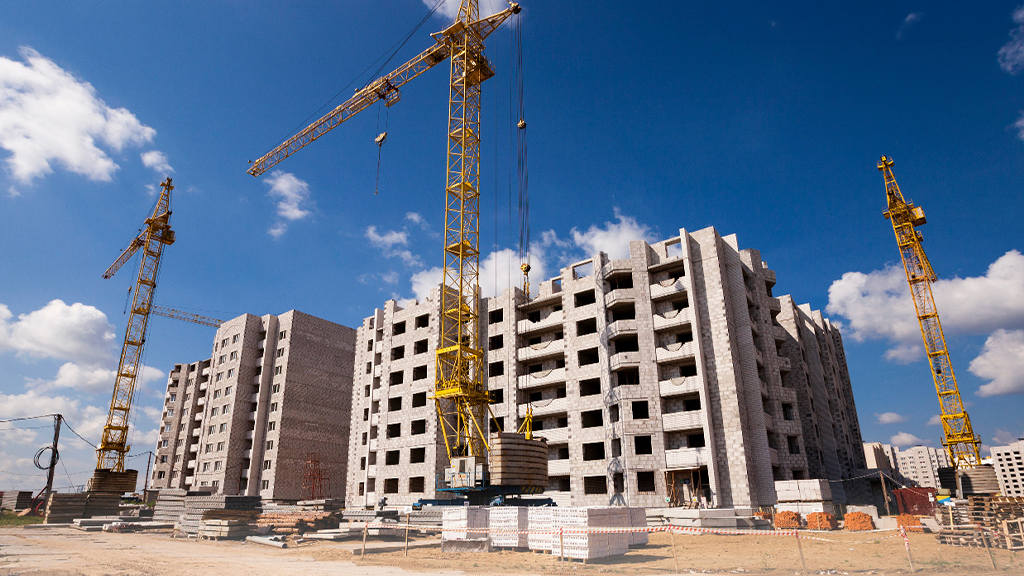
U.S. construction spending is forecast to reach $2.85 trillion by 2031, with five states expected to account for approximately 42 percent of the total combined, according to a new report from Merlo America and BiltData.ai.
The National Construction Spending Trends Report identifies the states, metropolitan areas, and sectors expected to drive the next phase of industry growth. The report is designed to help contractors, equipment dealers, and rental companies anticipate where demand is likely to emerge and make more informed decisions about fleet investment, inventory, service coverage, and expansion.
A massive construction boom is coming to the U.S.
The report suggests that U.S. construction spending will rise from $2.22 trillion in 2026 to $2.85 trillion in 2031 — an increase of more than $600 billion in five years. That is roughly equivalent to adding another Texas-sized construction economy by the end of the decade.
"Every business in our industry is making decisions today that will shape the next five years," said Cole Renken, general manager, Merlo America. "Whether you're investing in equipment, expanding a branch, or growing a service team, understanding where demand is heading gives you a real advantage. That's exactly what this report is designed to help with."
Dealers, contractors, and rental companies need to anticipate future growth patterns
The report projects that California, Texas, Florida, New York, and New Jersey will account for approximately 42 percent of U.S. construction spending by 2031, while the nation's top 10 metropolitan areas will collectively represent more than one-third of all construction spending.
The New York-Newark-Jersey City metropolitan area is projected to lead the country with $230 billion in construction spending by 2031, which would account for approximately 8 percent of total U.S. spending. Meanwhile, Los Angeles, Chicago, Dallas-Fort Worth, and Houston round out the nation's five largest construction markets.
For contractors, dealers, and rental companies, the report provides valuable insight into where future demand is expected to emerge. Understanding regional demand before it materializes helps businesses position themselves for growth with greater confidence, rather than reacting after the market has already shifted.
New construction is shaping demand across regions
The report also highlights the growing impact of AI on construction demand. Driven by AI, cloud computing, and digital infrastructure, the top 12 metropolitan markets are projected to account for nearly 73 percent of all U.S. data centre capacity by 2031.
For the construction industry, the rise of AI will mean more sites to prepare, more infrastructure to build, and more equipment needed on the ground. Markets including Dallas-Fort Worth, Washington, D.C., Chicago, and Phoenix are expected to remain among the nation's most active technology-driven construction markets.
"AI is accelerating investment in data centres and infrastructure, but the bigger opportunity is understanding where that work is happening. Our goal is to help contractors, dealers and rental companies move beyond the headlines by turning market data into practical insight they can use to make smarter decisions about where to invest and grow," shares Nick Mavrick, CEO of BiltData.ai.
Across all sectors, the report projects construction spending will reach $1.026 trillion in residential construction, $741 billion in commercial construction, $684 billion in industrial construction, including manufacturing and data centre development, and $399 billion in infrastructure investment by 2031. Together, these forecasts provide businesses with a clearer picture of where activity is expected to accelerate and where demand for equipment and services is likely to emerge.
"The value of this report lies in helping businesses move from reacting to planning," adds Renken. "Understanding where demand is expected to grow gives decision-makers the confidence to invest in the right markets and position equipment more effectively, ultimately supporting them to effectively plan for sustainable growth."
"Construction spending isn't increasing evenly across the country, and that's what makes this report so valuable," concluded Mavrick. "Merlo America shares our belief that businesses make better decisions when they have better market intelligence. Together, we've developed a report that helps contractors, dealers, and rental companies identify where opportunity is emerging and plan for it with greater confidence," concluded Mavrick.