
Gravis Robotics to scale autonomous solution globally with $200M funding round
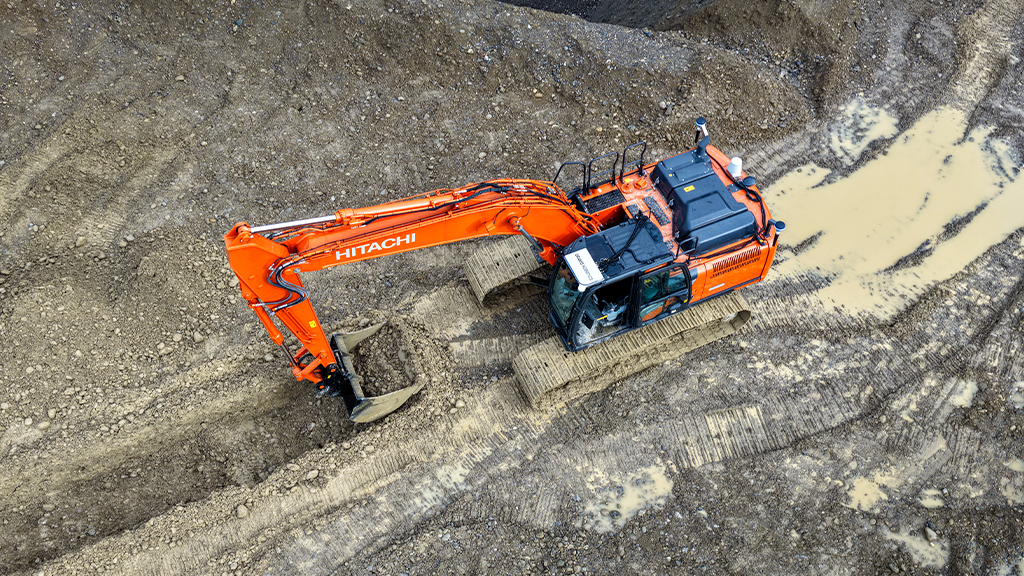
Gravis Rack can augment manual control or operate autonomously
Gravis Robotics has raised $200 million during its Series A funding round backed by SoftBank. The funding will accelerate Gravis's mission in physical AI — scaling autonomous heavy machinery across job sites globally.
Global infrastructure is in the middle of a massive expansion. Scaling the energy networks and data centres required for the AI economy is driving unprecedented demand, and the need for housing, transit, and climate-resilient infrastructure is equally urgent. Across every sector, construction has become the primary bottleneck, and we cannot reshape the physical world fast enough to keep up with demand. That shortfall stems from a severe labour crisis, but, according to Gravis Robotics, fixing it isn't just about hiring more people — it requires augmenting the workforce through automation.
How Gravis Robotics' autonomous equipment is specialized for construction
Most physical AI operates in static worlds. Self-driving cars steer around obstacles on smooth pavement, while humanoids and robotic arms move objects across fixed countertops or warehouse floors — leaving their surroundings completely undisturbed. But heavy equipment operates differently. It intentionally reshapes the environment.
Gravis Robotics intends to solve this challenge with models enriched by vast simulated experiences and that efficiently bridge the sim-to-real gap.
This synthetic training lets Gravis Robotics move billions of cubic yards of virtual earth and enables its software to bring factory-floor precision to historically unpredictable civil job sites. Rather than simply imitating individual operators, its AI world model incorporates the distinct performance characteristics of a wide range of manufacturers, making it generalizable and adaptable.
Dominic Jud, CTO and co-founder of Gravis Robotics, says that "Skilled operators read the earth through subtle physical feedback — listening to the engine strain, sensing the machine vibration, and reacting to hydraulic resistance. Our AI takes that same physical input and grounds it in machine telemetry, responding to varying subterranean forces and soil mechanics at microsecond speeds. We didn't try to simplify the world for our software; we gave it the physical intuition to handle real job sites with precision that goes beyond what any human can feel from inside the cab."
Mixed fleets can access a uniform system without customization
The heavy equipment market is highly fragmented, with roughly two-thirds of global demand sitting outside the top-three manufacturers. Contractors choose machinery based on deep regional service relationships and existing fleet investments — they shouldn't be forced into a closed, single-brand ecosystem, says Gravis.
Acting as an operating system for mixed fleets, Gravis Robotics' software runs on the Gravis Rack — the autonomous control kit — which has been installed across a range of machinery brands including Caterpillar, Case, DEVELON, John Deere, JCB, Hitachi, Sumitomo, Yanmar, Volvo, and more. Gravis Rack transforms conventional machines into fully robotic systems. Because its learning-based models excel at adapting to the nuances of machines, the same core software can drive a compact excavator or a machine five times its size without custom reprogramming.
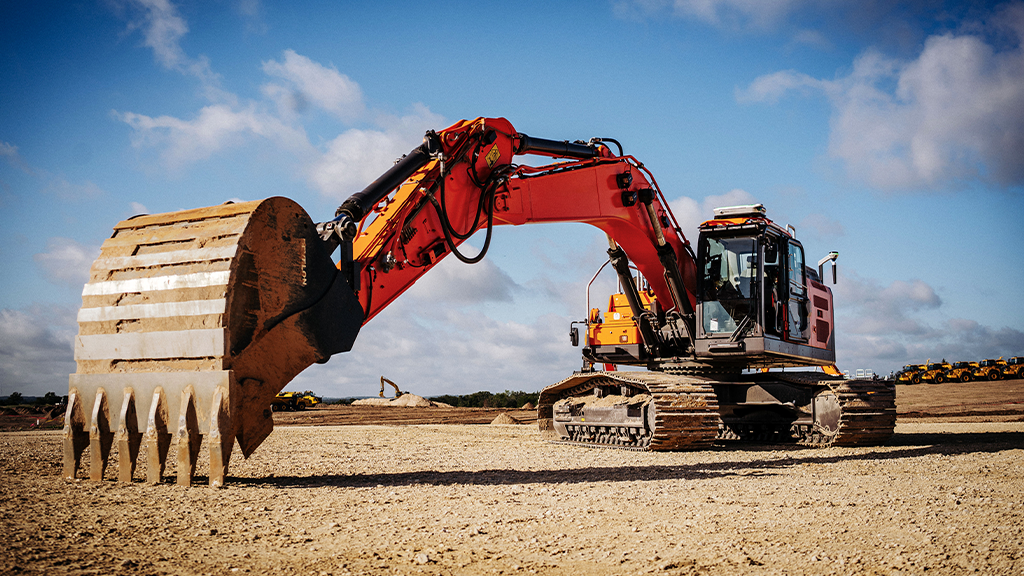
The Gravis Rack kit can be retrofitted to existing machines
Gravis says that the deep understanding of the nuances of individual machines and how they interact with the ground has allowed them to squeeze productivity from these systems, delivering up to a 30 percent boost in job site productivity compared to peak manual operation, while simultaneously improving overall worksite safety.
Its software stack is built for operational flexibility, offering a full spectrum between AI-augmented manual control and full autonomy. With Gravis Copilot, operators stay in the cab, utilizing real-time 3D guidance and hazard detection to elevate their daily performance. When full autonomy is engaged, those same operators can step away to supervise entire robotic fleets at once. Regardless of the mode, every Gravis-equipped machine acts as a continuous site sensor: automating surveying and hazard mapping in the background as the work gets done.