
Gravis Robotics' Gravis Rack turns conventional machines into robotic systems
The system supports automated workflows to put autonomy in the hands of operators
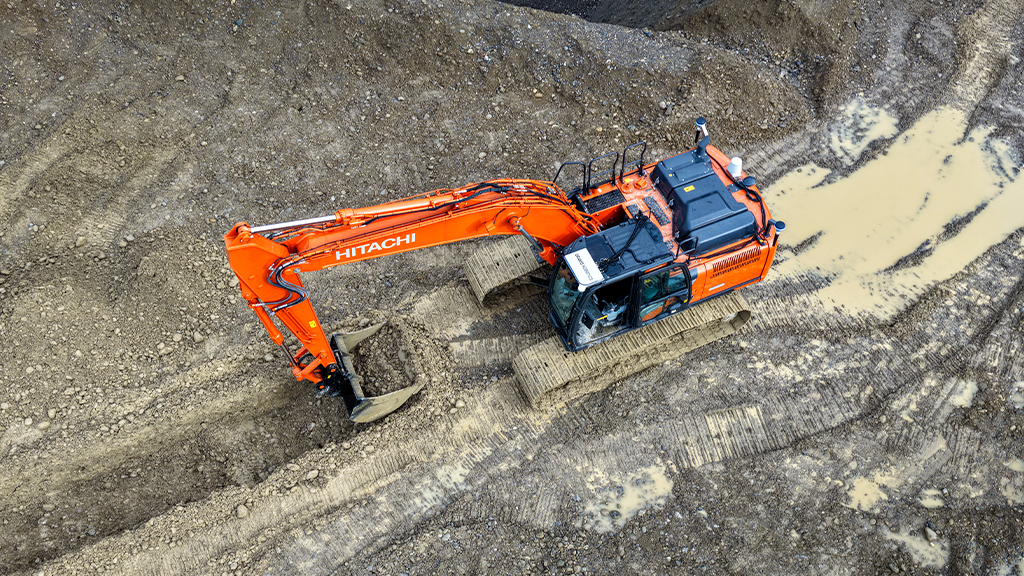
At CONEXPO-CON/AGG 2026, Gravis Robotics' Gravis Rack platform was selected by show attendees as the Contractors' Choice winner for Technology in the Next Level Awards program. Gravis Rack transforms conventional earthmoving machines into intelligent robotic equipment with sensors, on-board computing, and intuitive operator controls.
While robotics in construction is often discussed in terms of fully autonomous machines, Gravis Robotics is approaching autonomy differently. Instead of focusing solely on full autonomy, the company is developing systems that support operators and automated workflows, so contractors can incorporate automation without significantly changing how they already work.
"We want to address not just those people who are already tech savvy, but the entire community," said Ryan Johns, CEO and co-founder of Gravis Robotics, at CONEXPO-CON/AGG.
Gravis Robotics rethinks how automation is introduced
While construction technologies continue to advance, automation adoption across the industry remains inconsistent. According to Johns, fewer than 30 percent of the U.S. market is currently using machine guidance or machine control systems.
That reality shapes how Gravis Robotics designs its technology. Many job sites still rely on traditional workflows like survey stakes, stringlines, and paint markings rather than CAD-driven excavation plans. As a result, systems that assume fully digitized job site data can be difficult for many contractors to adopt.
Gravis Robotics addresses this disconnect by building tools that work with existing workflows while gradually introducing more advanced capabilities.
The company's approach frames autonomy not as an immediate leap, but as a progression, allowing contractors to adopt automation at their own pace while continuing to operate equipment in familiar ways.
A platform that turns conventional machines into robots
At the core of the platform is the Gravis Rack, a hardware and software package designed to be retrofitted to existing earthmoving equipment. It integrates LiDAR, cameras, GNSS receivers, and on-board computing into machines such as excavators, so the system can continuously map and interpret job site conditions. With processing occurring directly on the machine instead of in the cloud, the system updates excavation data in real time as conditions change.
A co-pilot for excavation
Inside the cab, the system acts as a digital co-pilot for operators. Operators can view live terrain visualization, cut-and-fill indicators, and augmented-reality guidance via the tablet interface to understand grade conditions and excavation targets.
Additional features, such as person detection and job site analytics, are designed to improve safety and productivity. The platform is intended to make advanced automation tools easier to adopt by giving operators a clear visual understanding of where material needs to be removed or placed without relying on complex machine control workflows.
Robotics on real job sites
Although construction robotics is often framed as a future technology, Gravis Robotics is already deploying its platform on active job sites. Early adopters include large contractors and engineering, procurement, and construction (EPC) firms that operate large equipment fleets and are focused on improving productivity and safety across complex operations.
These organizations often manage large-scale infrastructure and energy work where inconsistency in excavation performance can significantly impact productivity and project timelines.
The journey to autonomy
One of the key features of the Gravis Rack platform is its ability to support multiple levels of automation. Operators can use the system for manual operation with visual guidance, assisted excavation tasks, or fully autonomous operations, depending on the application.
Autonomous tasks currently supported include trenching, bulk excavation, and truck loading.
Operators can interact with the system using the portable tablet interface from inside the cab, remotely from outside the machine, or even from an off-site office environment.
Gravis Robotics plans expanded capability
As the technology and uptake continue to evolve, Gravis Robotics is expanding the range of tasks and machines supported by the platform. Development includes additional excavator capabilities and support for attachments such as breakers and grapples. The company is also exploring automation for additional machines, including wheel loaders.
Instead of treating autonomy as an all-or-nothing shift, Gravis Robotics is developing systems that can be introduced one step at a time. With tablet-based controls and operator-assist features, the technology can be used alongside existing workflows without complicated disruptions.
For Gravis Robotics, autonomy is built around the operator, not in place of them.
This article originally appeared in the April 2026 issue of Heavy Equipment Guide.