
What to look for when buying a compact track loader
Experts explain CTL size, hydraulic, comfort, maintenance, and technology options
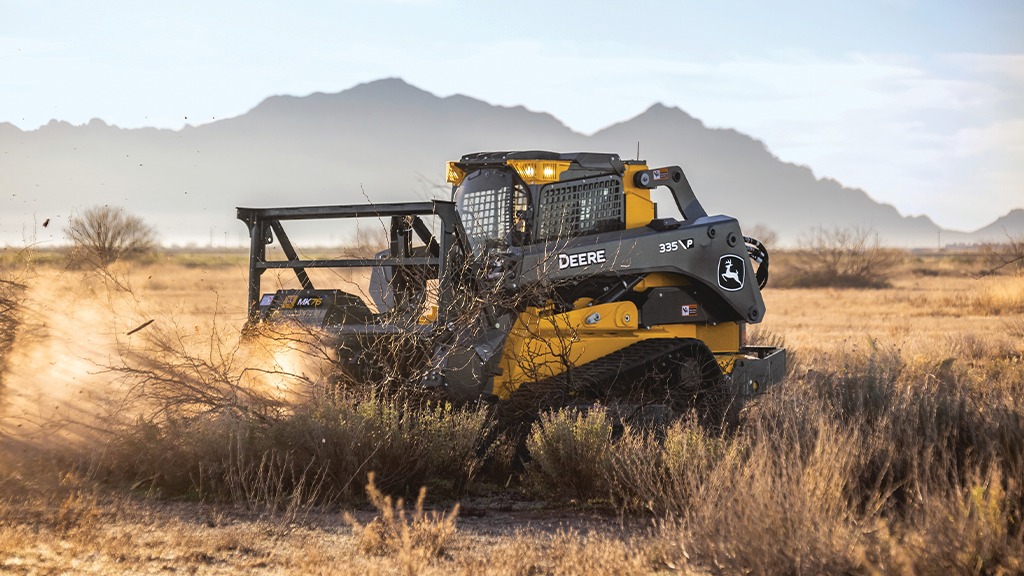
Compact track loaders are among the most versatile machines on the job site, and more than a dozen manufacturers offer CTLs in North America. We reached out to the experts and asked for their advice to help you dial in on the right choice for your business. Here are their tips for CTL selection.
1. Start with fundamentals to match a machine to your job site
Application, job site space and access, seasons of use, and ground conditions will provide initial direction when choosing a CTL.
Our experts agree that the CTL's lift path is an important early consideration. Radial lift CTLs are great for ground-level work, such as digging and grading. Vertical lift machines are more suited to loading trucks and other applications that require higher lifting.
While considering horsepower is important, and it is one of the most advertised CTL specs, Lee Tice, senior product manager at JCB, suggests looking at the torque as well. "Torque is what helps a machine push into a pile, climb grades, power through tough ground conditions, and maintain performance under load. Operators feel torque every time they accelerate, grade, or carry heavy material across uneven terrain."
CTLs are chosen for their traction, flotation, and low ground pressure. However, not every job site places the same demands on the undercarriage. Joe Boufford, CASE Construction Equipment's product marketing manager for construction products, notes that landscapers working on finished lawns will require lower ground pressure and a smoother ride, while contractors working in more rugged demolition or site development applications will prioritize durability, traction, and stability under load.
There are two categories of undercarriage to choose between, says Peter Ovrebo, director of product management at Yanmar Compact Equipment North America. Rigid undercarriages are generally lower cost but transmit more ground impact to the machine and operator. Suspended undercarriages provide better ride quality and traction.
Where buyers often go wrong is size. Dan Kakareka, product marketing manager at New Holland Construction, says, "One of the biggest mistakes buyers make is choosing a machine that is either too large or too small for their typical work. A CTL should match material weights, attachment requirements, and job site conditions operators face most often."
He adds, "Buying a right-sized machine improves productivity, reduces unnecessary fuel consumption, and helps avoid premature wear caused by overworking an under-sized loader."
Seasonal applications should also be considered, says Jonathan Gardner, construction equipment product manager at Kubota Canada. "Particularly for contractors who use attachments such as snowblowers or pushers throughout the winter months. Evaluating year-round operating conditions can help ensure the machine is properly matched to the work environment."
2. Equip your CTL for attachments that will drive utilization
The value you get out of your CTL relies on the attachments you have for it. Attachment diversity is a good strategy for alleviating the pressures of tighter margins, labour shortages, and rising equipment costs. A well-equipped CTL can reduce the number of machines you need on the job site, and it can be used year-round.
"Many contractors focus first on engine horsepower," says Dylan Freeman, Takeuchi-US product manager, "but auxiliary hydraulic performance can have an even greater impact on machine versatility. Buyers should evaluate hydraulic flow pressure and available high-flow options based on the attachments they plan to use. Demanding attachments, such as mulchers, cold planers, trenchers, and brush cutters, require sufficient hydraulic capability to perform efficiently."
Attachments also come in a variety of sizes and configurations, notes Ovrebo from Yanmar. Just because the attachment can fit to your machine doesn't mean that it's the right size for your application — physical dimensions matter. "A bucket, for example, may sit within the width of the tracks or extend beyond them, which has real implications for how the machine performs and manoeuvres on the job site."
Jason Taylor, compact equipment product manager from HD Construction Equipment Hyundai North America, recommends a universal hydraulic quick coupler for fast and tool-free attachment changes, especially if you will frequently switch between attachments on the job site.
And don't forget to research attachment compatibility. Joel Hicks, product line manager at Kioti, points out that some manufacturers offer attachment options designed specifically for their machines, while others support a broader range of third-party attachments.
3. Choose a CTL that suits your operators
Good operators are in short supply. Selecting a machine that elevates your operators' comfort, confidence, and efficiency will help you retain them and maximize their productivity.
Operators who spend a lot of time in a CTL need to be comfortable, both in terms of ergonomics and operation, says Nathan Ryan, product line manager for earthmoving at Manitou. Before buying, assess cab design for ease of entry and exit, ensure that the seat is comfortable, and test the controls for easy reach and adjustment. If possible, test the CTL in a job site setting.
Air-ride seats, climate-controlled cabs, intuitive joystick controls, touchscreen displays, and good visibility all reduce operator fatigue and improve their performance throughout the day, says Emily Pagura, product marketing manager at John Deere. She adds, "While comfort features can seem optional during the buying process, they often contribute to better operator retention, increased efficiency, and fewer mistakes over the life of the machine."
Modern CTLs can be tailored to the operator's preference, says Freeman from Takeuchi. Adjustable control patterns, creep mode, and customizable hydraulic settings will improve precision and efficiency. Freeman recommends you look for a machine with intuitive controls and straightforward display layouts that make adjustments easy to access and understand.
When crews have a wide mix of experience levels, machines that are intuitive and adaptable will help them work more efficiently with less ramp-up time, says Randi Bakalar, corporate communication manager from Bobcat. The less experienced operators will benefit from straightforward controls, good visibility, and simplified technology. Experienced operators will prioritize consistent response and familiar control patterns across machines.
And, once you have the machine, make sure your operators understand the different control settings, says Pagura from John Deere. "One of the best operation tips I can give, especially when working with a brand-new machine, is to work through those settings to get the machine set up in the most efficient way."
4. Consider technology that improves productivity, safety, and fleet management
Built-in technology features can help operators work more efficiently and confidently, and telematics systems can give owners deeper insight into their fleet.
"Features such as return-to-dig, bucket or auxiliary shake, and auto self-levelling help simplify repetitive tasks while improving precision and productivity," says DEVELON Product Manager Andy Jeong.
Self-levelling helps maintain load position as the loader arms move. But, Ovrebo from Yanmar cautions, not all systems work the same. "Single-direction self-levelling, typically hydraulically controlled, keeps loads level as the arms raise but offers no levelling control on the way down. Dual-direction self-levelling uses electronic angle sensors to maintain level in both directions."
Ovrebo recommends dual-direction control if the loader will regularly be used to handle material that shifts easily, such as full buckets or palletized loads.
"Look for manufacturers that include telematics as standard equipment rather than an added-cost option, as connected machine data is quickly becoming an essential part of equipment ownership," says Kakareka from New Holland.
A telematics system can help you remotely monitor machine location, fuel usage, idle time, service intervals, and fault codes via a desktop computer or mobile app. "This visibility can help reduce downtime, improve maintenance planning, and identify opportunities to lower operating costs," he adds.
Technology can deliver safety benefits as well. Rear-view cameras, all-around-view camera systems, and ultrasonic proximity sensors can all increase safety around the machine, says Jeong from DEVELON.
5. Factor in the total cost of ownership
Evaluating maintenance access, service intervals, dealer support, and transportation logistics before purchasing can help you keep your total cost of ownership in check.
"The up-front purchase price is only part of the equation. Long-term ownership costs, including maintenance, downtime, fuel usage, and serviceability, often have a much bigger impact on overall value over the life of the machine," says Tice from JCB.
"For example, a contractor that relies on one CTL for grading in spring, landscaping in summer, and snow removal in winter may place a higher value on fast parts support and a payment structure that aligns with seasonal revenue," says Boufford from CASE.
According to Hicks from Kioti, maintenance requirements can vary significantly between CTLs. Some machines are designed with easier access to components, while others may require more time-consuming processes or more frequent service.
Look for swing-out cooling systems, tilting cabs, and simplified maintenance layouts, recommends Gardner from Kubota. They will improve accessibility for technicians.
DEVELON's Jeong recommends considering the day-to-day impact of the machine's emission system. Machines that require diesel exhaust fluid (DEF) need extra maintenance, have additional operating costs, and necessitate different storage considerations, particularly in extreme weather. CTLs with engines under 74 hp don't need an SCR system or DEF, simplifying maintenance.
Also consider the build of the machine. Taylor from Hyundai says that a CTL engineered for durability should be assembled with high-grade steel components sourced from reputable suppliers and should be built to withstand rugged environments and heavy-duty applications.
Be sure to evaluate the undercarriage, including track design, roller protection, track tensioning system, and overall serviceability, especially if you will be working in abrasive or muddy conditions, says Kakareka from New Holland. Ask the dealer about expected undercarriage life, its replacement cost, and maintenance intervals.
Your truck and trailer must also be able to tow the CTL safely, says Ryan from Manitou.
Buckets, forks, trenchers, augers, grapples, and other tools all add weight and take up trailer space, which can impact your hauling requirements and efficiency, adds Tice from JCB. "A compact loader that delivers strong performance while maintaining a manageable operating weight gives crews more flexibility when transporting both the machine and the attachments needed for the day's work."
This article originally appeared in the July/August 2026 issue of Heavy Equipment Guide.
Company info




6100 Atlantic Blvd.
Norcross, GA
US, 30071
Website:
na.hd-hyundaice.com
Phone number:
877-509-2254
840 Lily Lane
Grand Rapids, MN
US, 55744
Website:
yanmar.com/us
Phone number:
218-327-3434