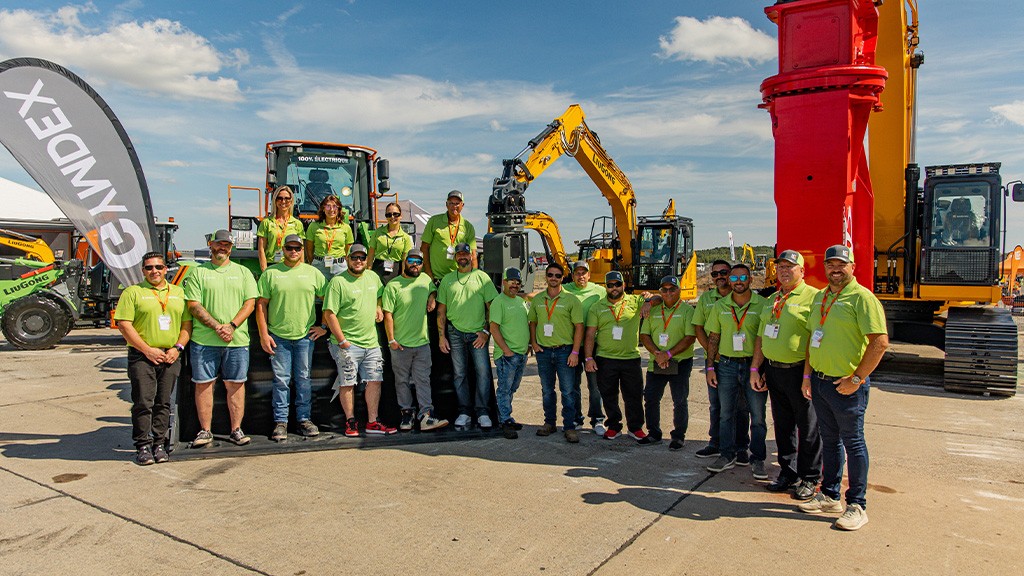

Spotlight on Canada's equipment dealers: Tidal Tractor
Delivering access and adaptability in Atlantic Canada’s equipment market
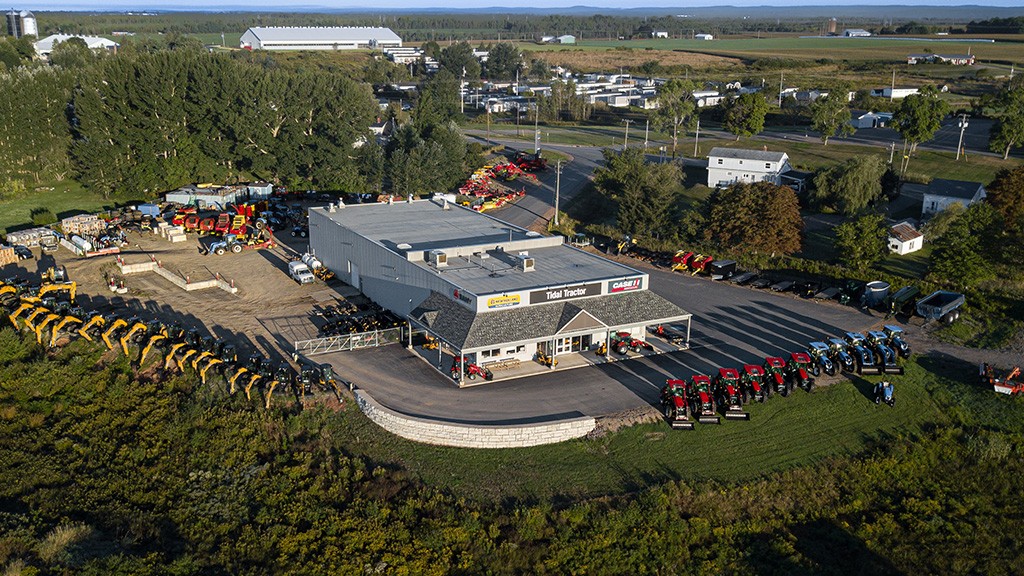
Across Atlantic Canada, the equipment market is defined by a steady mix of smaller, fast-moving opportunities, including residential construction, municipal infrastructure, forestry, and utility work. For Tidal Tractor, with customers covering the farming, construction, and consumer markets, responsiveness and access often matter just as much as the equipment itself.
Demand remains steady across Nova Scotia, New Brunswick, and Prince Edward Island, supported by urban development alongside ongoing infrastructure upgrades and resource-sector activity.
Within that mix, certain equipment categories are consistently sought after. According to Adrian McBriar, territory manager at Tidal Tractor, that demand is concentrated in small and mid-sized, versatile machines.
McBriar says that 4- to 8-tonne and 15- to 23-tonne excavators are popular. These machine sizes reflect the nature of work across the region, where many projects favour versatility and mobility over large-scale, high-production equipment.
Availability drives decisions
One of the defining characteristics of Atlantic Canada is how quickly opportunities can emerge and how quickly contractors must respond. Contractors in this region often need to secure equipment on short timelines to capitalize on available work. That dynamic places added pressure on both dealers and customers, making inventory access and delivery timelines critical factors in purchasing decisions.
"Availability is important as contracts may be awarded at short notice," McBriar says. "We keep a lot of equipment in stock. We keep a lot of attachments in stock. If a customer comes to us today with the funds, we should be able to have him out the door in less than a week with equipment that he needs."
By stocking the machines and attachments most commonly used in the region, the dealership avoids delays associated with shipping from other provinces or international suppliers. That ability to respond quickly is critical in a market where timing can determine whether a contractor secures or misses an opportunity.
Customer priorities shaped by cost and support
While competition among equipment suppliers is strong, customer priorities remain grounded in reliability and long-term performance.
McBriar points to aftersales support, warranty, product reliability, and cost as the key factors that guide purchasing decisions, even as customers become more informed about available products and pricing.
At the same time, financing conditions are playing a larger role in shaping the market, particularly for smaller or newer contractors.
"We don't have in-house financing, we use lending partners," McBriar says.
That reliance on external lenders can create barriers to entry, especially for younger companies that have not yet established strong credit histories.
"You definitely have to be creative, particularly with the younger companies that are only two or three years old," he adds.
In some cases, that means using alternative purchasing options, such as rent-to-own structures, to help customers build toward ownership.
Labour constraints and technology adoption
Labour availability is a significant challenge across the region.
"There are definitely lots of stories about the guys who have more machines than they have operators because they can't get operators to sit in the seat," McBriar says.
That shortage is one of several factors shaping how contractors approach equipment and technology investments. Technology adoption is slower in Atlantic Canada, but McBriar is seeing an increase in inquiries for 2D and 3D systems.
Adoption varies depending on the scale of operations. Larger companies are more likely to invest in fully integrated systems, while smaller owner-operators tend to be more selective.
"Some companies have bought into the full comprehensive system . . . but that's a huge expense. So you've got to have the work lined up to pay for that."
For smaller fleets, the return on investment is not always as clear, McBriar adds. "If you're jumping from one job to another, it's not often required with the type of work you're on."
The Atlantic project pipeline
The construction landscape across Atlantic Canada tends to be steady but is rarely defined by one large civil infrastructure project.
There is still construction. McBriar points to ongoing highway twinning and infrastructure work, but says there isn't anything huge. "That's kind of how a small province works."
Beyond infrastructure, potential growth areas include mining, port expansion, and renewable energy projects, such as wind farms. However, many of these opportunities remain in early stages.
"We have a mineral-rich province, but we're struggling to get [those resources] out of the ground," he says, pointing to regulatory and public approval challenges.
As a result, growth tends to come incrementally, with new activity emerging gradually rather than through large, single-project surges.
Practical priorities shape what's next
As the market evolves, long-term considerations are expected to play a greater role in equipment decisions.
"We think long-term operating costs and dealer support will become increasingly more influential," McBriar says.
Concerns around operating costs also shape how manufacturers approach machine design, with greater emphasis on operator experience that supports productivity and uptime. This is particularly appreciated in Atlantic Canada, where labour constraints and tight timelines make both critical.
"They realized we need better seats, better cab interior, more operator comfort," he says, pointing to recent equipment trends.
As demand evolves, having the right mix of equipment, attachments, and technology is increasingly important for both contractors and dealers.
With that foundation in place, McBriar says the focus is on being ready when opportunities emerge. "When the time comes, we'll be well positioned to respond."
This article originally appeared in the May/June 2026 issue of Heavy Equipment Guide.