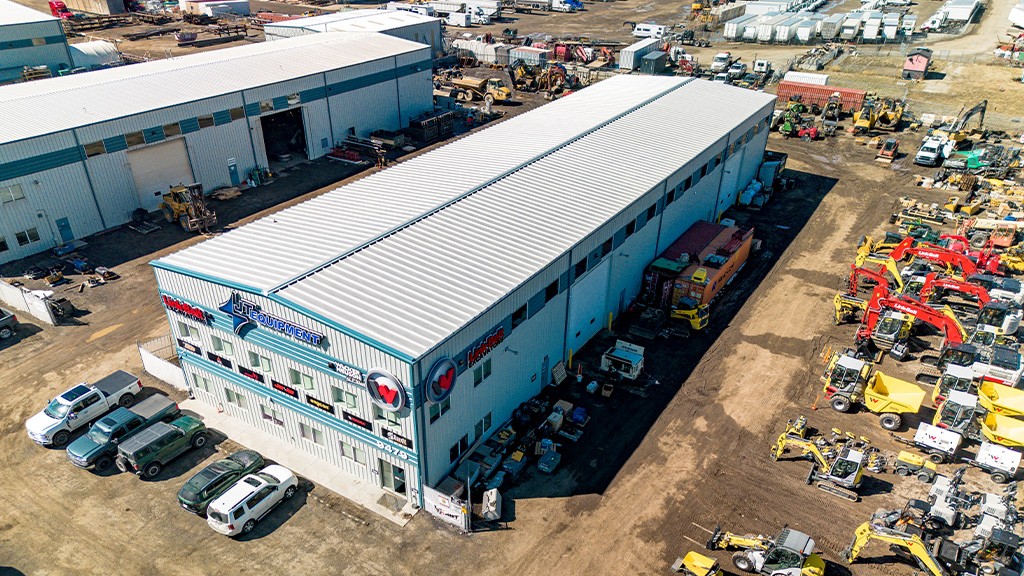

Spotlight on Canada's equipment dealers: Groupe Gymdex
Reading the signals in Quebec’s equipment market
In Quebec, the construction equipment market follows cycles shaped by government procurement, seasonal slowdowns, and early indicators that signal what's coming next.
For Groupe Gymdex, those signals are critical to understanding demand across the province and helping customers plan ahead to position themselves for upcoming work. According to Jean-Nicolas Gonzalez, sales representative, the current market is uneven, with strong activity in some sectors and hesitation in others.
"On the construction side, it's not really good," Gonzalez says. "But now we're seeing a lot of demolition. When we see demolition we know the construction contracts are going to come along."
Demolition first, construction later, is a defining pattern in Quebec. As older structures are taken down, contractors position themselves for the next phase of development. For dealers and contractors, demolition activity is often the clearest early signal that new work is on the horizon.
A government-driven project pipeline
Infrastructure remains the backbone of Quebec's equipment demand, with roadwork, bridges, and major urban projects driving activity across the province.
Gonzalez says projects are awarded through a centralized, province-wide bidding system where contractors compete for government work. But that structure also introduces volatility. When large firms don't secure major contracts, they move into smaller-scale work, increasing competition and putting pressure on smaller contractors. In a market where government work can account for a significant share of activity, the timing and volume of public tenders directly influence the entire ecosystem.
At the same time, private-sector construction has been constrained by broader economic conditions. When the interest rate is high, construction activity dips. Gonzalez says that the construction slowdown has shifted activity toward demolition and recycling activity in the short term, but signals an eventual return to new construction cycles.
Seasonal swings
Weather is another defining factor in the Quebec market, creating more pronounced seasonal swings than in some other regions.
"From January to beginning of March, we don't see a lot of movement . . . because everything is frozen," Gonzalez says.
That slowdown is particularly evident in industries like forestry, aggregates, and earthmoving, where frozen ground limits activity. In some areas, the impact is significant enough to reduce equipment sales to a fraction of peak-season levels.
This creates a compressed operating window, with activity accelerating quickly once conditions improve. By late June, Gonzalez expects to see a lot of contracts and a lot of demand for machines.
The timing of government contracts often aligns with this seasonal shift, reinforcing that mid-year surge in demand.
Labour shortages and external pressures
Labour availability remains one of the most pressing challenges across the Quebec market, says Gonzalez.
This shortage is influencing both equipment selection and job site strategy, with contractors looking for ways to increase productivity with fewer workers. Attachments, automation, and machine control systems all play a role in helping crews do more with less.
That focus on productivity is also reflected in the types of equipment and attachments gaining traction in the market. As a Kinshofer dealer, Groupe Gymdex has seen growing interest in multi-function attachments and is expanding its offering to include NOX tiltrotators, which allow operators to perform a wider range of tasks with a single machine.
At the same time, external market pressures are affecting key industries. In logging — a major sector in Quebec — shifting trade dynamics have created uncertainty.
"We were really exporting a lot of wood to the U.S., and they've pretty much closed the border with that," Gonzalez says. "It's really rough."
Companies are beginning to explore alternative export opportunities, such as Europe, but those transitions take time.
Technology adoption is driven by operators
As in other regions, technology is playing an increasingly important role in equipment decisions. Contractors are adopting tools such as machine control, on-board weighing systems, and advanced camera technologies to improve efficiency and precision. Operators are placing greater emphasis on comfort, control, and ease of use, and their influence on purchasing decisions continues to grow.
"It's really the operator that's deciding which machine they want," Gonzalez says.
The transition to newer technologies is not without challenges, particularly as machines move from traditional hydraulic controls to fully electronic systems. While electronic controls can reduce physical strain and improve long-term efficiency, they also change how operators interact with the machine.
"They were able to feel the soil . . . with the joystick," Gonzalez explains. "Now they don't feel it anymore."
Because there is an increased expectation of high efficiency and productivity with the integration of new technologies, downtime can have an even greater impact. The pressure to keep machines moving means that dealer support and responsiveness is more important than ever. "When machines break down . . . you need to have fast service," Gonzalez says. "That's honestly our strength right now."
A leader in electrification
Despite current challenges, there are clear signs of momentum building. Demolition activity, pending infrastructure projects, and continued investment in technology all point toward future growth.
Contractors are increasingly focused on efficiency in terms of machine performance and how work is executed across the job site.
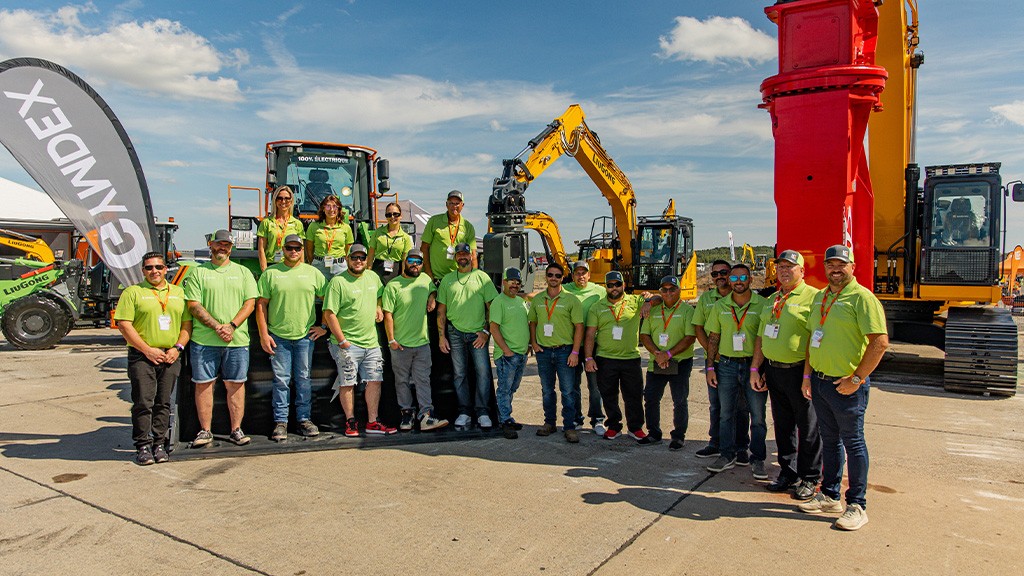
For Gonzalez, one of the most significant developments in the region is electrification. As the exclusive distributor of LiuGong's electric wheel loaders and excavators in Quebec, Groupe Gymdex is already seeing interest in the segment.
In Quebec, where electricity comes from renewable resources and costs are relatively low, the electric proposition is particularly compelling. Provincial incentive programs support adoption in the market, and Gymdex is ready to help customers evaluate where electric equipment can fit within their operations.
"That's really what I'm excited about," he says. "We're gaining a lot of market share with the electric machines."
This article originally appeared in the May/June 2026 issue of Heavy Equipment Guide.