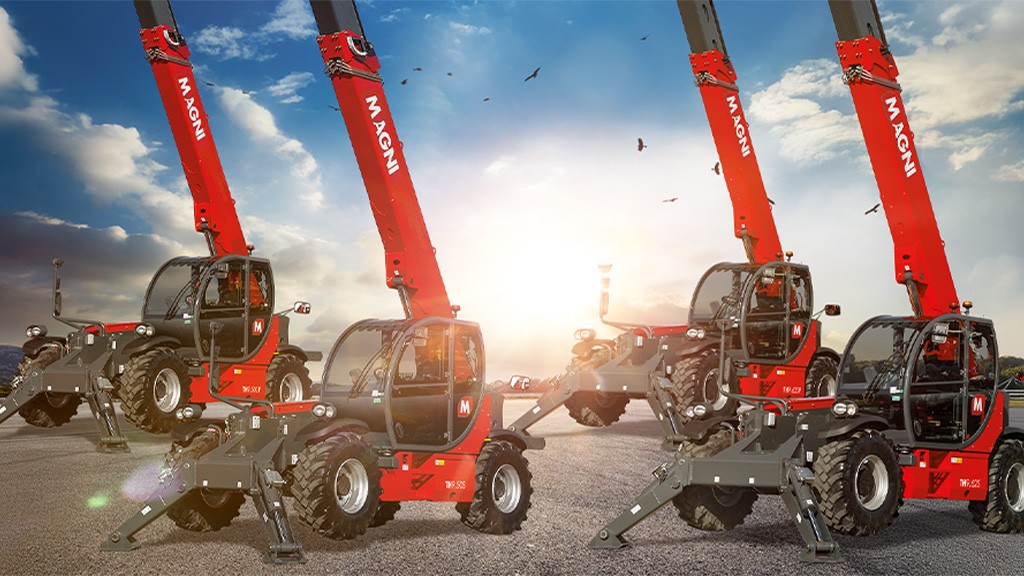

North America's highest-lifting rotating telehandlers
These powerful three-in-one machines can do the work of small cranes, aerial work platforms, and fixed telehandlers
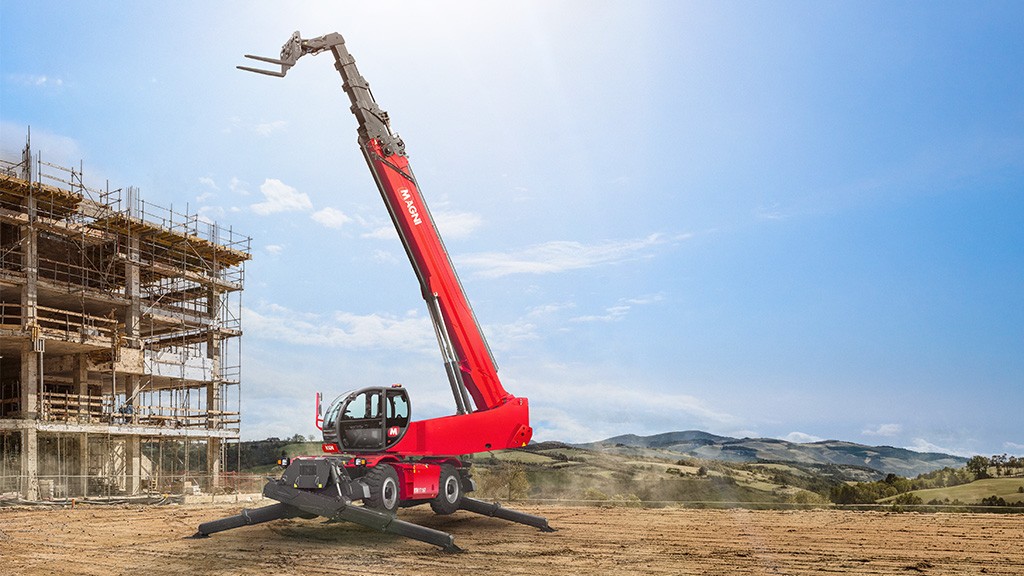
Rotating telehandlers are a flexible alternative to many types of equipment, including aerial work platforms and high-capacity material handlers. They have also become an attractive replacement for small cranes on tight urban job sites due to their added manoeuvrability and quick set-up times.
Compared to fixed telehandlers, they can place heavier loads at greater heights without repositioning. Ideal for industrial construction, maintenance and renovation, roofing, and framing, the rotating telehandler is an efficient and powerful three-in-one machine.
A variety of attachments further the rotating telehandler's capability. These include winches, jibs, hooks, aerial work platforms, forks, general-purpose buckets, and even more specialty options for unique applications. Today's rotating telehandlers are technologically advanced for safe placement of their heavy loads. Remote control, real-time load and stability monitoring, and cameras promote job site awareness.
Many of today's rotating telehandlers can crane heavy loads to impressive heights while maintaining a small footprint. With that advantage in mind, let's take a look at some of the highest-lifting, farthest-reaching rotating telehandlers available in North America.
Magni's highest-lifting rotating telehandler is the RTH 17.167
Magni's RTH 17.167 is the highest-lifting rotating telehandler in the world. Optimized for performance that challenges compact off-road cranes, the RTH 17.167 has a maximum lift height of 167 feet and a maximum reach of 113 feet. When fitted with the company's TP 4.5.10 platform attachment, this rotating telehandler can reach a maximum working height of 207 feet.
The RTH 17.167 is packed with technology to promote safe and efficient lifting. Magni notably offers three reach modes on this model:
M1, or Max Outreach Mode, is a unique extension sequence. Smaller end sections are extended first and larger sections are extended last. Magni says that this mode increases both the range and the load capacity of the boom's horizontal reach and provides greater capacity at maximum height.
M2, or Max Capacity Mode, extends boom sections in a specific order, starting with the largest and finishing with the smallest. This optimizes load capacity in the early stages of extension and enables the boom to handle bigger loads than Max Outreach Mode. It's ideal for lifting heavier loads in a shorter range.
M3, or Full Power Mode, deactivates boom extension and retraction when the working position is reached to increase load capacity and improve stability. When paired with winches or winch booms, it is ideal for operating as a crane. By blocking the boom extension, the impact of dynamic forces generated by friction on the chains is reduced. Rotating and lifting are still enabled.
Manitou's highest-lifting rotating telehandler is the MRT 3570
The MRT 3570 is Manitou's highest-lifting rotating telehandler. It delivers a maximum lifting height of 114 feet and a maximum forward reach of 92 feet. Maximum capacity is 15,432 pounds. It features a 211-hp engine and a continuous CVT transmission. ECO-LIFT adjusts engine speed automatically and ECO MODE automatically adapts engine speed to the needs of the transmission, reducing fuel costs.
Manitou emphasizes exceptional job site visibility. The telehandler has a ROPS/FOPS Level 2-compliant ultra panoramic cab option that gives operators a clear view through the roof — and there is no roof window grill. Rear-view and boom-mounted cameras promote excellent job site awareness, and dynamic load charts ensure the operator can continuously monitor their machine's limits.
Automatic levelling of telescopic outriggers promotes precise movement and stability. A radio remote control with integrated screen allows for precise control, and the machine can be moved from the platform basket or at a distance.
Manitou will soon add an even higher-lifting model to its rotating telehandler lineup. The MRT 4070 will have a maximum lift height of 131 feet, a maximum outreach of 88 feet, and a maximum lift capacity of 15,400 pounds.
JLG Industries' highest-lifting rotating telehandler is the R13100
JLG recently introduced the R13100, the successor to its previous highest-lifting rotating telehandler, the R11100. New operator-focused features and greater connectivity headline the update. This model offers a 13,200-pound capacity and a maximum lift height of 97 feet. Maximum reach is 86 feet. It has 360-degree continuous rotation and is powered by a 168-hp engine. A two-speed, stop-to-shift hydrostatic transmission provides smooth travel on rough terrain. JLG has redesigned the counterweight and integrated lights into it, and a new integrated remote-control mount and optimized joystick controls improve operator comfort and efficiency. The remote boom control is standard.
Several systems promote safe lifting on the R13100. Automatic attachment recognition identifies the attachment and displays the load chart for the operator. JLG's Load Management Information System (LMIS) supports operation outside of load limit boundaries. Load Stability Indication (LSI) provides visual and audible alerts when approaching forward stability limits.
Merlo's highest-lifting rotating telehandler is the ROTO 50.35
Merlo's ROTO 50.35 has a maximum capacity of 11,000 pounds and a maximum lift height of 112 feet. Maximum reach is 89 feet. It is powered by a 170-hp engine with CVT transmission. A variety of options, depending on machine version, are available.
Merlo's ASCS safety system, viewable on a 10-inch colour display with automatic brightness adjustment, ensures that the operator is aware of real-time stability conditions. It adjusts speed and maximum movements based on the attachment, load, and position, eliminating the risk of overturning. Operators will appreciate the ergonomic cab, which tilts 20 degrees to facilitate comfortable load monitoring.
Continuous turret rotation provides unrestricted, efficient access to the entire working area. Infinitely configurable stabilizers ensure that the 50.35 can safely work in tight spaces.
This article originally appeared in the May/June 2026 issue of Heavy Equipment Guide.