
Five practical steps to strengthen safety on your job site
Managing crews and operations with safety in mind can improve outcomes and protect productivity
During Construction Safety Week, United Rentals, Inc. has outlined five practical, often underutilized, ways contractors can strengthen safety on the job site, improve compliance, and protect productivity.
Timed with Construction Safety Week (May 4-8), these actions reflect effective strategies contractors can adopt to reduce risk, safeguard crews, and build a stronger safety culture across project phases.
"Safety is a leading driver on a job site, from protecting people to keeping projects on schedule," said Teresa Kee, vice president, Health and Safety, United Rentals. "When contractors take a proactive, systems-based approach to safety, they can reduce risk, improve productivity, and strengthen overall project performance. We help customers do that with integrated solutions, expertise, and training designed for real job site conditions."
Five actionable tips to implement on your job site today:
1. Strengthen access management
As job sites grow more complex, controlling who and what enters the site is critical. RFID-enabled access management systems streamline worker authentication at entry points and restrict equipment use to authorized personnel, improving both safety and operational control.
2. Prioritize preventive maintenance
Equipment failures can create avoidable delays. Structured maintenance and inspection programs help identify issues early, reducing the risk of breakdowns and improving overall fleet safety. Keeping equipment operating effectively and efficiently reduces the chance of potential distractions to jobsite safety focus. Partnering with a single provider can simplify these processes and ensure consistency.
3. Stabilize ground conditions with matting
Unstable ground increases the risk of slips, trips, falls, and equipment instability. Ground protection mats create level, secure surfaces for both workers and heavy equipment, improving traction, reducing damage, and supporting safer movement across the jobsite.
4. Designate and train a competent person
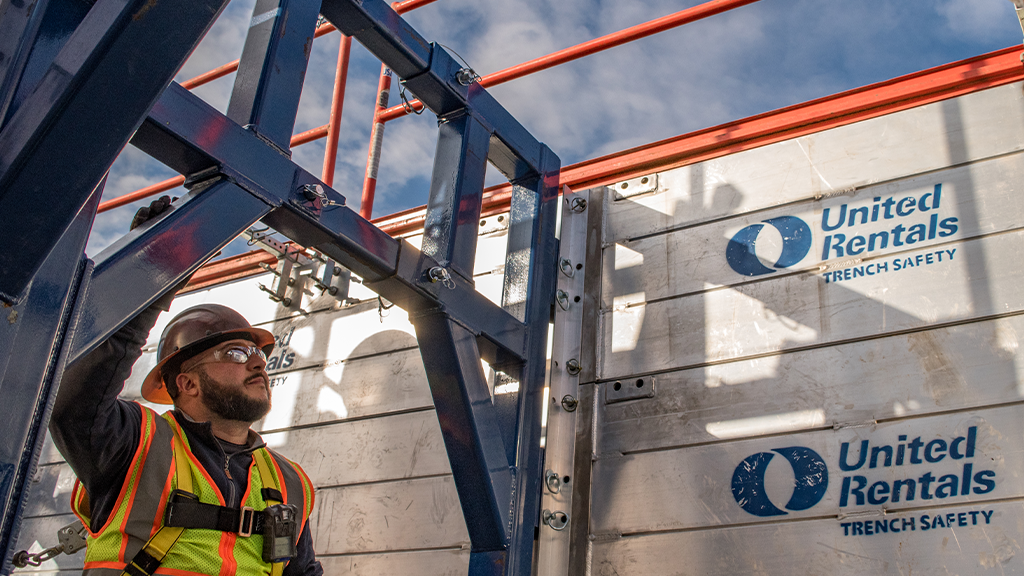
Trenching and excavation remain among the high-risk activities. OSHA requires a designated competent person to oversee these operations, including soil classification and protective system selection. Ongoing training helps to ensure this role stays aligned with current standards and best practices.
5. Expand visibility with remote monitoring
Remote monitoring technologies extend oversight without increasing exposure to risk. Solutions that track temperature, humidity, and site conditions help inform decisions around ground thaw, concrete curing, and equipment use, while reducing the need for workers to access sites in hazardous conditions.
United Rentals Worksite Performance Solutions integrates technology, access control, and real-time insights to help contractors improve safety outcomes and jobsite efficiency. United Academy provides comprehensive training and certification programs to support safer, more productive worksites.