

Rollers offer greater control over density and smoothness
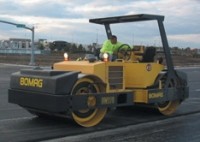
BOMAG Canada’s BW266 and BW278 tandem-drum vibratory rollers feature high frequency and centrifugal force, independently variable front- and rear-drum vibration, and an exclusive multi-system performance indicator (MSPI). The MPSI optimizes control and productivity by allowing the operator to input maximum working speeds and automatic vibration start/stop speeds as well as front/rear drum vibration frequency and amplitude. Also, by calculating drum-impact spacing, the system offers greater control over density, smoothness and rolling patterns.
The 130-hp rollers produce a maximum of 3,800 vpm. Offering a 66-inch drum width, the BW266 can generate up to 32,950 pounds of centrifugal force, whereas the BW278 features a 78-inch drum width and a centrifugal force of 37,099 pounds.
The high vibration frequency allows both the BW266 and BW278 to achieve a working speed of 4.3 mph while maintaining a minimum of 10 impacts per foot. The combination of faster working speeds with higher output means the rollers are able to cover more area in less time without sacrificing compaction performance. In addition, independently variable front- and rear-drum vibration frequencies allow both units to meet specified smoothness and density requirements.
An asphalt mat temperature sensing system (AMTSS) is standard. Measuring the surface temperature of the asphalt while the compactor rolls across the mat, AMTSS is especially useful for Superpave projects when mat temperatures reach the “tender zone” and compaction must cease. The platform-mounted display allows the operator to monitor temperatures without stopping or getting off the machine.
Dual centre-facing seats provide outstanding visibility and comfort in both travel directions while levers mounted on either side of the operator console permit convenient one-hand control of travel direction, speed and manual vibration on/off.
The engine is traverse mounted and positioned low in the rear frame to further increase rear-drum visibility and also to simplify service and direct heat and noise away from the operator’s platform.
Radial pneumatic drum isolators provide a cushion of air between the drum and the machine. This contributes to increased productivity and extended service life by transmitting energy into the project surface, instead of back into the machine.
The 130-hp rollers produce a maximum of 3,800 vpm. Offering a 66-inch drum width, the BW266 can generate up to 32,950 pounds of centrifugal force, whereas the BW278 features a 78-inch drum width and a centrifugal force of 37,099 pounds.
The high vibration frequency allows both the BW266 and BW278 to achieve a working speed of 4.3 mph while maintaining a minimum of 10 impacts per foot. The combination of faster working speeds with higher output means the rollers are able to cover more area in less time without sacrificing compaction performance. In addition, independently variable front- and rear-drum vibration frequencies allow both units to meet specified smoothness and density requirements.
An asphalt mat temperature sensing system (AMTSS) is standard. Measuring the surface temperature of the asphalt while the compactor rolls across the mat, AMTSS is especially useful for Superpave projects when mat temperatures reach the “tender zone” and compaction must cease. The platform-mounted display allows the operator to monitor temperatures without stopping or getting off the machine.
Dual centre-facing seats provide outstanding visibility and comfort in both travel directions while levers mounted on either side of the operator console permit convenient one-hand control of travel direction, speed and manual vibration on/off.
The engine is traverse mounted and positioned low in the rear frame to further increase rear-drum visibility and also to simplify service and direct heat and noise away from the operator’s platform.
Radial pneumatic drum isolators provide a cushion of air between the drum and the machine. This contributes to increased productivity and extended service life by transmitting energy into the project surface, instead of back into the machine.