
How to pick the right size of excavator
Strategies to help you determine whether sticking with a smaller machine is optimal — or if it’s time to go bigger
"One size fits all" is rarely true on a construction job site, unless you're talking about a pair of safety goggles or a set of ear plugs. And it certainly doesn't apply when selecting an excavator.
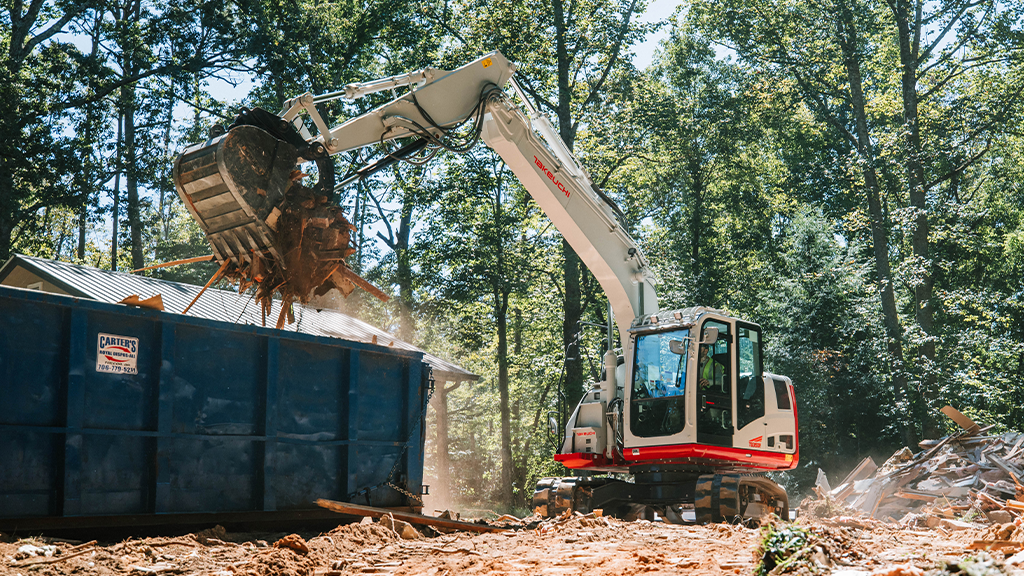
Today's excavators are expected to do far more than dig. With the right attachments, a single machine may trench for utilities in the morning, set pipe after lunch, and finish the day breaking up concrete or grading a site. That versatility makes choosing the right excavator especially important because contractors may ask a single machine to perform multiple roles throughout a project.
In fact, with so many machine sizes and configurations available, selecting the right excavator for your project can have a significant impact on productivity, operating costs, and profitability. But right-sizing an excavator isn't simply about choosing the biggest machine that fits the budget or the smallest machine that can complete the work.
"There's a more strategic way to decide what excavator is the optimal size, whether you're renting one for a single job or purchasing one to handle most of your projects," says Nolen Hood, product manager for Takeuchi-US. "The key is to think about how you'll be using the machine and where, as well as any plans for future business growth or expansion."
Start with the work your excavator is expected to perform
The first step in selecting the right excavator is understanding the work the machine will be expected to perform. If you're renting for a particular project, that means evaluating the specific demands of that job. If you're purchasing, it means identifying the demands you'll encounter across most of your typical projects. An excavator used primarily for utility installation will have different requirements than one dedicated to site development, demolition, or landscaping. The work itself should help you determine the digging depth, reach, lifting capability, hydraulic performance, and manoeuvrability you'll need from your excavator to complete jobs efficiently.
You should also consider which attachments the machine will use most frequently. Buckets, hydraulic thumbs, breakers, augers, and grapples all place different demands on the excavator. Selecting a machine with the hydraulic performance, stability, and lifting capacity to support those tools ensures it can transition efficiently between tasks without compromising productivity.
"You may find that no one excavator can fill all your needs," Hood says. "But until you start really thinking through the services you offer and what you may want to offer in the future, you may not know that. It's all a part of the process. There may be times when renting an excavator that's a different size or configuration is the best way to tackle a specialized application without adding another machine to your fleet."
When selecting an excavator, consider the entire job site
Once you understand what you need the excavator to do, it's time to consider the job site where it will operate.
"A larger excavator may offer greater digging and lifting capability," says Hood. "However, if you can't transport it efficiently between jobs or manoeuvre it safely in confined work areas, those advantages may be offset by reduced versatility and higher operational costs."
The physical characteristics of the job site can be just as important as the work itself. Available working space, transportation requirements, ground conditions, and access limitations can all influence whether a conventional-tail-swing or reduced-tail-swing machine — or even a different weight class altogether — is the better choice. Contractors should also evaluate the excavator's working envelope, including tail swing, reach, and loading height, to ensure the machine can work efficiently within those site constraints.
"Contractors working alongside buildings, roadways, or existing utilities may benefit from a reduced-tail-swing machine that can manoeuvre more easily in confined spaces," says Hood. "Meanwhile, conventional-tail-swing excavators are often better suited for open job sites where maximum stability and lifting performance are priorities."
When to choose a bigger excavator
Sometimes, right-sizing an excavator for the job means moving into a larger size class. As businesses grow and take on larger or more demanding projects, their equipment needs often evolve as well.
Smaller excavators may perform exceptionally well for residential construction, landscaping, and many utility applications. For larger commercial developments, infrastructure projects, and heavy utility work, you often need a machine with greater digging depth, reach, and lifting capability than a small excavator can efficiently provide.
"The decision to move into a larger excavator size class should be driven by business needs," Hood says. "If crews consistently find themselves working at the limits of their current equipment, making extra digging passes, struggling with lifting requirements, or turning away projects because the machine lacks the necessary capability, it may be time to move into the next size class."
As contractors take on a wider variety of projects, manufacturers have expanded their excavator lineups to provide contractors with more options that bridge the gap between traditional compact and full-size machines. These larger compact excavators are designed to deliver increased digging power, lift capacity, and hydraulic performance while retaining many of the transport and manoeuvrability advantages that have made compact excavators so popular.
Takeuchi's new excavator is the largest in its lineup
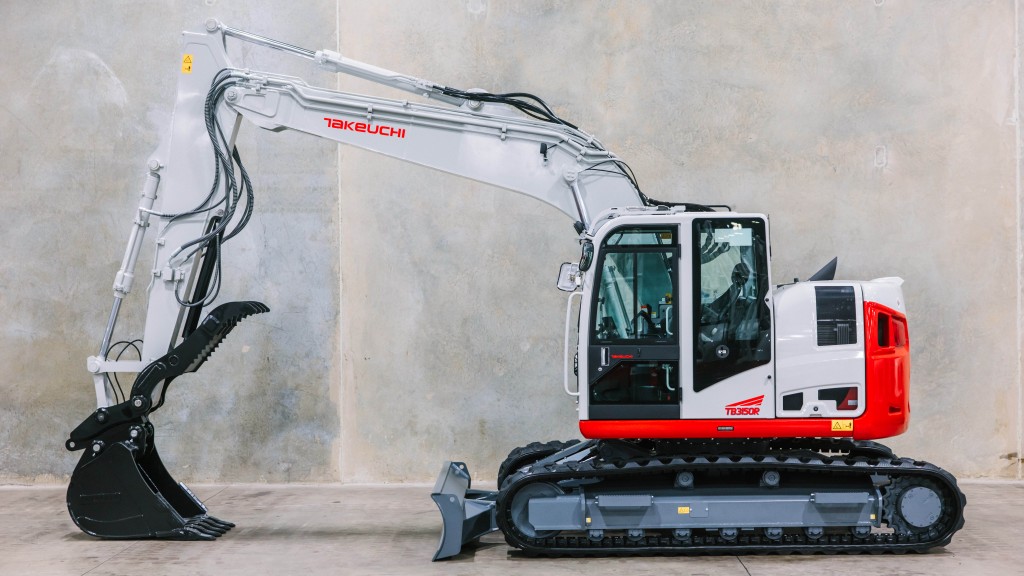
One example of this evolution is Takeuchi's new TB3150 and TB3150R models, which, after their launch in November 2026, will be the company's largest excavators available in the North American market. These new 15-ton models replace their predecessors, the TB2150 and TB2150R.
"We developed the TB3150 and TB3150R for contractors who need additional performance as they take on larger commercial, utility, and site development projects," Hood says. "Rather than simply increasing machine size, we focused on giving customers a solution that better suits the way they work."
The TB3150 features a boom swing system for offset digging without repositioning the machine, making it well suited for utility work and other applications requiring precise positioning. Powered by a 115-hp engine and offering an operating weight of approximately 34,755 pounds, the excavator also incorporates increased hydraulic horsepower, a redesigned operator's station, and standard Takeuchi Fleet Management telematics to support productivity, operator comfort, and fleet uptime.
"The TB3150 illustrates how Takeuchi is responding to contractors who need greater capability but don't necessarily need a full-size excavator," Hood says. "As we and other manufacturers continue to evolve our equipment offerings, contractors have more options than ever to select a machine that more closely aligns with their specific applications, job sites, and long-term business goals."
The right excavator will support the work at hand and your long-term goals
Selecting the right excavator isn't about choosing the biggest machine or the one with the most horsepower. Instead, consider the machine that best supports the work at hand and your business' long-term goals. Hood says that by carefully evaluating typical applications, job site conditions, operating requirements, and future growth plans, you can better choose a single machine or add another to your existing fleet.
"Taking your time, weighing your options, and eventually making the right choice should result in greater productivity, stronger returns on investment, and the flexibility to take on new opportunities as your business evolves," he concludes.
___________________________________________________________________________________
Lynette Von Minden is vice president and director of public relations at Swanson Russell.
This article originally appeared in the 2026 Excavators special issue of Heavy Equipment Guide.