

Why electro-hydraulic controls are the new standard for heavy excavators
EH controls represent an entirely new way of managing machine dynamics
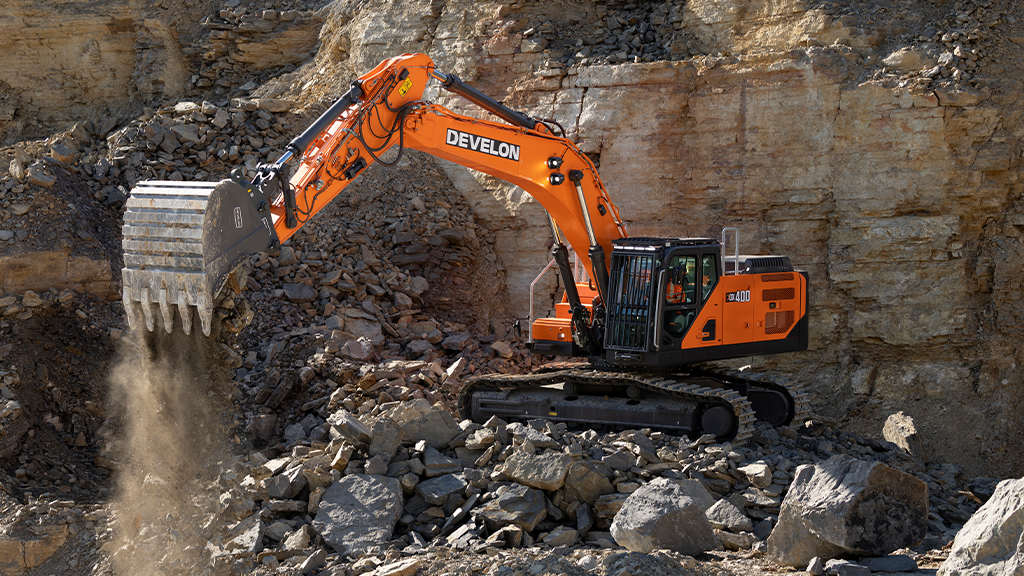
For decades, the unmistakable hum and physical resistance of hydraulic oil circulation directly beneath an excavator operator's hands was the defining hallmark of machine performance. Today, that physical connection is rapidly fading.
The heavy construction equipment industry is undergoing a quiet but profound transformation. OEMs are replacing traditional mechanical pilot control systems in excavators in favour of full electric-over-hydraulic, or electro-hydraulic (EH), controls for enhanced performance and versatility.
There's more to the transition than operator preferences or engineering simplification. It represents an entirely new way of managing machine dynamics, protecting thin profit margins and mitigating labour shortages on today's construction job sites. The latest generations of crawler excavators entering the market are launching with EH controls as the standard set-up.
"At the end of the day, both pilot controls and EH controls direct the excavator's hydraulics," says Brian Kim, excavator product manager at DEVELON. "But with an EH system, you trade old-school mechanical simplicity for an entirely new realm of customizability, precision, and seamless technology integration."
Pilot vs. EH controls
To better understand the scale of this industry trend, it helps to break down how these two excavator control designs handle everyday tasks like trenching and lifting material.
Kim explains that traditional pilot controls rely entirely on physical fluid dynamics to execute an operator's commands. Inside a standard pilot-controlled excavator control, a dedicated, low-pressure pilot pump continuously forces hydraulic oil up into the cab and directly through the joystick housings.
"When an excavator operator moves a lever to swing the machine's house or lift the boom, they are physically shifting a mechanical spool to route that low-pressure oil back down to the main control valve," he says.
While mechanical pilot controls have traditionally been highly dependable, the configuration requires a complex web of hydraulic hoses routed directly inside the operator's cabin, adding physical complexity and potential leak points to the machine's layout.
The modern EH controls in many new excavators entirely eliminate the low-pressure pilot pump and the network of oil lines running into the operator's cabin. Kim explains that mechanical joysticks are replaced with digital transducers that turn physical motion into data.
Key differences between mechanical pilot controls and EH controls
- Pilot systems use low-pressure hydraulic oil as their primary signal medium. EH platforms rely entirely on digital electrical currents.
- Mechanical set-ups require physical oil lines routed directly under the joysticks, whereas EH controls utilize a clean electronic wiring harness.
- A centralized controller sends precise electrical current to electro-hydraulic valves instead of fluid pressure that must physically shift valve spools to a digital framework.
"EH controls replace those hydraulic pilot signals with electronic inputs," says Kim. "Instead of using oil to physically actuate the main control valve, the joystick sends an instantaneous electrical signal to a centralized controller. That controller then commands the electro-hydraulic valves to perform the desired function."
EH controls unlock next-gen capabilities and smart technologies
A primary driver behind the industry-wide migration to EH controls is the effortless integration of advanced, software-driven job site technologies. Excavators built with EH controls already use software to communicate with the main hydraulic pumps and valves.
"Software developers can integrate intelligent features natively without turning a single wrench or physically tweaking hardware components," says Kim.
This digital foundation for EH controls has unlocked a suite of advanced capabilities that are fast becoming standard project requirements:
Semi-automated grade control: EH controls allow factory 2D and aftermarket 3D excavator guidance systems to step in and actively control hydraulic flow parameters. When finishing a slope or digging a precise trench, the software automatically adjusts the excavator's boom and bucket positioning to keep the edge perfectly on grade, regardless of operator adjustments.
Virtual fencing: Safety parameters can be mapped directly into the excavator's software. Operators can set strict digital ceilings, floors, or swing walls to prevent the excavator from physically encroaching on overhead power lines, active traffic lanes, or buried utilities.
Intelligent lift assist and payload weighing: By monitoring electronic pressure sensors and geometry, modern control systems calculate live lifting capacities based on real-time chassis tilt, alerting operators before a load creates a tipping risk. It also tracks bucket payload weight on an in-cab screen to prevent overloading dump trucks.
EH controls eliminate joystick reliability woes
For some contractors, this clean electronic set-up alleviates a long-standing headache: the unreliability of aftermarket components. Matt Quinnell, owner of Advanced Wall Structures, a Minnesota-based contractor specializing in intricate commercial boulder retaining walls, has run complex tiltrotator attachments on his crawler excavators since 2018. He recalls the constant maintenance required by legacy mechanical set-ups.
"I previously used aftermarket joysticks and had a separate hydraulic stack set-up to run the auxiliary functions," he says.
"I had issues with my aftermarket joysticks where the microswitches would go bad after a certain number of hours, so I got pretty good at soldering in new microswitches. Now, it's all just the factory equipment. If I do have an issue, it's a lot easier to diagnose because I can just go into the computer and see the fault code."
A powerful equalizer for bridging the skill gap
The ongoing shortage of highly skilled heavy equipment operators is a constant challenge for construction business owners and project managers. EH control systems act as a powerful equalizer by smoothing out sudden excavator joystick movements and offering automated assistance. This levels out the performance curve between a novice and a seasoned worker.
"The technologies that come with EH controls can help bridge that skill gap," says Kim. "It minimizes the need for tedious manual adjustments — reducing cycle times and allowing a relatively new operator to nearly match the daily productivity of a highly seasoned veteran."
Quinnell has experienced this labour dynamic first-hand within his own business and has used advanced attachments and built-in machine guidance to combat workforce constraints.
"That's a big reason why we made those investments in technology," he says. "We do jobs now with just one person in a machine where before it required two labourers on the ground. You can take someone who is less experienced, put them in the excavator with machine guidance, and they can still do the same job as someone who is far more experienced."
EH infrastructure future-proofs fleets for an automated tomorrow
From a long-term fleet management perspective, the industry's widespread adoption of EH controls fundamentally alters how machines are maintained and upgraded over their multi-year lifespans.
In a traditional mechanical fleet, adjusting how an excavator handles or adding a new feature requires physical intervention: turning wrenches, swapping out internal valve springs, or installing complex hydraulic blocks. The EH infrastructure allows manufacturers to optimize excavator performance parameters and roll out entire new operating features seamlessly via software updates, completely bypassing the need for physical hardware changes.
"Many leading manufacturers are now utilizing over-the-air wireless updates to push these optimizations directly into the excavators in the field, minimizing service calls and reducing unscheduled shop downtime," says Kim.
Most importantly, the shift to electro-hydraulic provides the mandatory framework for the next major frontier in earthmoving: autonomous operations.
"While widespread job site autonomy is still an evolving trend, the industry's swift migration to EH controls ensures that the machines rolling off assembly lines today are fully prepared for the digital demands of tomorrow," says Kim.
_________________________________________________________________________________
Ryan Johnson, APR, is a public relations and content strategy manager at Two Rivers Marketing in Des Moines, Iowa.
This article originally appeared in the 2026 Excavators special issue of Heavy Equipment Guide.