
The case for hybrid construction equipment
Hybrid machines help contractors adapt to shifting job site demands
Ask contractors what matters most on a job site, and "hybrid" equipment rarely tops the list, but reliability, productivity, and staying on schedule do. The good news is that today's hybrid equipment can deliver on all three, bridging the gap between traditional diesel machines and electric alternatives.
While electric equipment is well-suited to some applications, it isn't the right fit for every job. Limited charging infrastructure, longer recharge times, and high-demand applications can make electric equipment difficult to rely on for a full day's work. Renting a hybrid offers a practical middle ground. By combining diesel and electric power, hybrid machines reduce fuel consumption and emissions while delivering the performance that contractors expect.
While there are still some considerations around operator training and maintenance, hybrid machines are proving that improved efficiency doesn't have to come at the expense of reliability or performance. So where does hybrid equipment make the biggest impact? In the way it helps contractors stay productive, control costs, and adapt as projects evolve.
Hybrid power increases equipment availability
Productivity is measured in uptime. Every hour equipment sits idle — waiting to be refuelled, recharged, or repaired — is an hour that costs time and money. Hybrid boom lifts can reduce this idle time on-site.
In electric mode they can run a full shift on a single charge, well-suited to indoor work or jobs with noise and emissions restrictions. When a job calls for longer runtime, they can easily switch to hybrid mode, using diesel and extending working time between fuel stops. A single tank of diesel can deliver a week of runtime, keeping crews productive.
The diesel engine also recharges the battery on-site, cutting or eliminating the need for external charging infrastructure — a real advantage on job sites where electrical service is unavailable or temporary power is limited. As a result, contractors avoid unnecessary downtime while maintaining the benefits of electric operation whenever the job allows.
Lower emissions and quieter operation extend working hours
Exhaust and noise restrictions rule out using diesel equipment on some projects, such as renovating a hospital wing while the facility stays operational. In this scenario, the contractor can rent a hybrid boom lift that runs in zero-emission electric mode indoors, then switch to hybrid power for the next phase of the project outside. The contractor doesn't need to rethink the equipment plan or schedule another delivery.
Outside of the building, a hybrid power pack can run lighting, battery charging, and tools all day without the constant engine noise of a standard generator. In both of these situations, hybrid equipment meets low noise and emissions requirements and can extend working hours where work would otherwise be shut down early.
As demand grows for sensitive projects, the ability to cut both emissions and noise is becoming less of a competitive advantage and more of a baseline requirement. Hybrid equipment gives contractors a practical way to meet those expectations without sacrificing productivity or falling behind schedule.
Fuel savings add up
Fuel is one of the largest controllable costs on a job site, making equipment choice an important part of the equation. Fully electric equipment eliminates it entirely, but the total cost isn't always lower once you factor in charging infrastructure, available power, and rental rates.
Hybrid equipment burns fuel only when it's needed, cutting fuel consumption without changing how crews operate. Many hybrid models can lower fuel use by as much as 30 percent compared to conventional diesel equipment. This results in fewer fuel deliveries, less time spent refuelling, and lower total fuel spend.
Those savings may seem small on a day-to-day basis, but they compound over a multi-week or multi-month project, and when bidding they can mean the difference between winning the job or not.
One hybrid rental can handle shifting project demands
Projects rarely go as planned. A job that starts outdoors can quickly move inside, the scope of work can change, schedules shift, and equipment that was suitable one day may not remain the right fit.
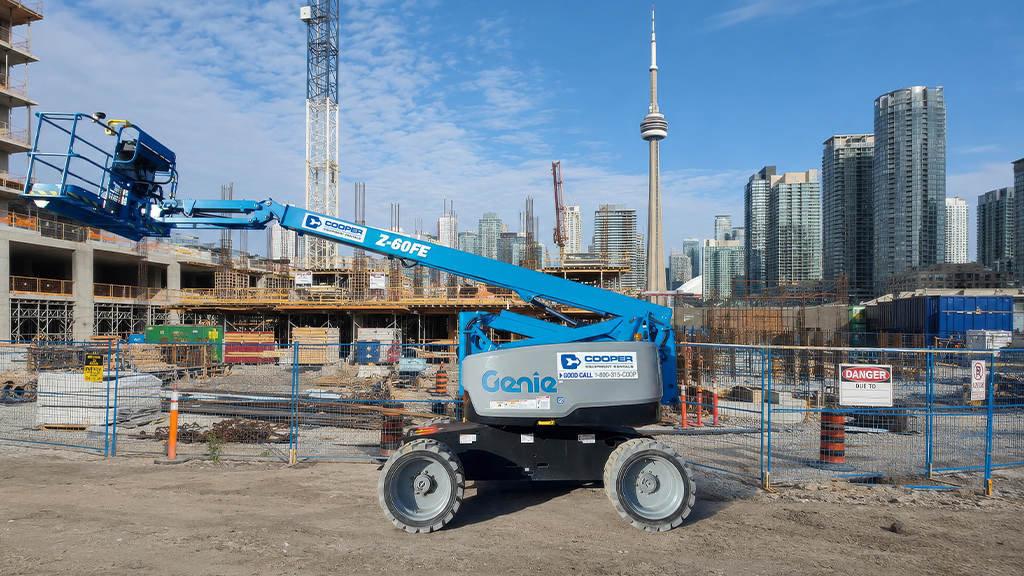
Instead of renting one machine for outdoor work and another for indoor applications, a hybrid rental handles both and is more flexible to meet shifting demands. A hybrid boom lift, for example, can work outside using hybrid power and then transition indoors in electric mode, where low noise and zero emissions are often required. The result is one piece of equipment that can adapt as the project evolves.
That level of flexibility simplifies equipment planning and reduces costs. Fewer equipment swaps mean fewer deliveries and pickups, lower transportation expenses, and less time spent coordinating rental changes.
What to weigh before you switch
Choosing the right equipment starts with understanding the job, and cost is usually the first consideration. Some hybrid machines may come with a slightly higher rental rate than their diesel counterpart, but that doesn't necessarily make them more expensive to operate. A machine running daily on a busy project can offset that premium quickly through lower fuel use and less downtime, but if it's sitting idle for long periods, those savings take longer to materialize.
Maintenance is another factor. Hybrids combine two power systems, which means more components and possibly fewer available technicians with the right training. A knowledgeable rental partner should be able to explain where hybrid equipment delivers the greatest value, when conventional equipment may be the better choice, and how to support your crews throughout the project.
Most operators adapt to hybrid equipment quickly, but there's also a learning curve. Crews still need to understand when to use electric mode, when hybrid power makes more sense, and how to get the most out of the machine.
The best equipment decisions are based on the realities of the job site, and hybrids can deliver real gains in fuel efficiency, emissions reduction, and flexibility, but, like any equipment investment, the biggest returns come when the machine is matched to the right application.
Smart equipment decisions are driven by practicality
Cutting emissions and controlling costs while staying competitive isn't always easy, and it means no longer evaluating equipment based on performance alone. Factors like fuel efficiency, emissions compliance, maintenance requirements, and equipment adaptability carry real weight. Hybrid equipment lets contractors move forward with the productivity and flexibility that they actually need.
For contractors weighing the switch, the path forward isn't to replace every diesel machine overnight. Instead, it's to introduce hybrid equipment where it can have the greatest impact. With the right rental partner, contractors can make that transition with confidence.
Mike Wijayasundar is the director of rental equipment at Cooper Equipment Rentals.
This article originally appeared in the October 2026 issue of Heavy Equipment Guide.
Company info

255 Longside Dr.
Unit 103
Mississauga, ON
CA, L5W 0G7
Website:
cooperequipment.ca
Phone number:
1-877-329-6531