
Growing from construction telematics to job site intelligence
John Deere expands beyond telematics with Tenna and Virtual Superintendent
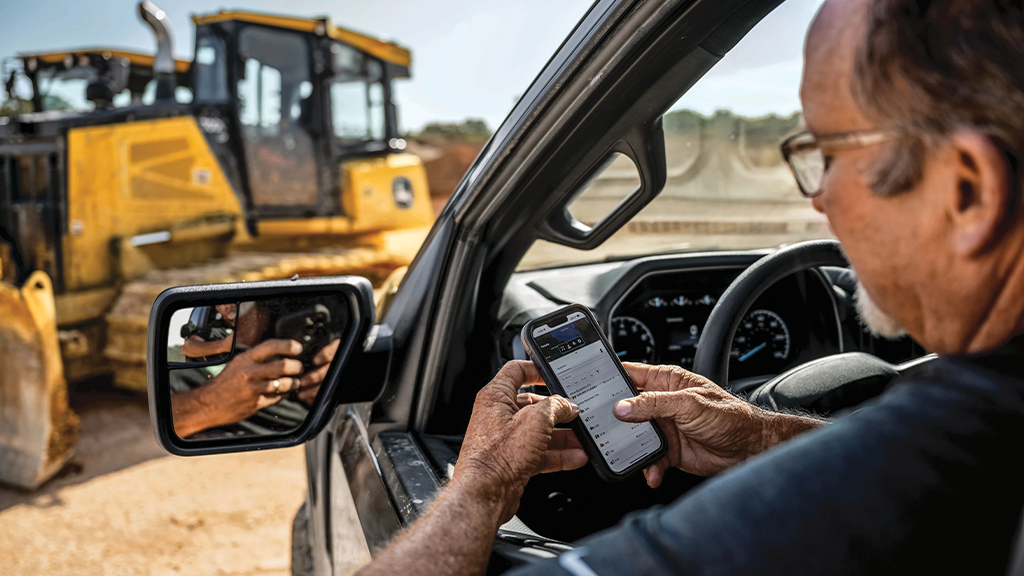
As contractors face tighter margins, labour shortages, and increasingly complex projects, telematics data has become the foundation for a new generation of job site intelligence tools. While machine location, engine hours, and utilization remain important, contractors now require real-time visibility into productivity, costs, workflows, and performance across the entire operation.
That shift is behind John Deere's recent acquisitions of Virtual Superintendent and Tenna. Together, the platforms move beyond traditional fleet tracking toward operational analytics, productivity monitoring, and mixed-fleet asset management.
Jonny Spendlove, manager of precision construction product management at John Deere, says the strategy reflects a broader view of the company's role in construction.
"Deere fundamentally is a job site company," says Spendlove. "We're focused on helping customers across the entire job site. And that goes way beyond machines. It goes way beyond yellow iron."
John Deere's construction technologies at a glance
Tenna is a fleet, asset, maintenance, safety, and compliance platform designed for construction and earthmoving contractors. The system tracks equipment and non-powered assets across mixed fleets, integrating data from OEM telematics systems or Tenna-installed hardware.
Typical users include fleet managers, dispatchers, safety leaders, and parts managers who use the platform to monitor utilization, schedule equipment, manage maintenance workflows, track compliance documentation, and oversee inventory. By consolidating fleet and asset information into a single platform, Tenna helps contractors coordinate resources across multiple job sites and improve operational efficiency.
Virtual Superintendent is an operations management platform that uses telematics data and automated workflow tracking to measure productivity and job costs in near real-time.
Operators clock into machines or job functions, while site supervisors and foremen monitor production activities as they occur. The system automatically tracks activities such as loading cycles, hauling, and completed work tasks, connecting operational performance to project costs and productivity outcomes. Real-time dashboards allow superintendents, project managers, executives, and business owners to monitor job progress, review historical performance, and identify bottlenecks before they impact profitability.
Expanding beyond construction telematics
Telematics has become a foundational technology across much of today's construction equipment fleet, but according to Spendlove, contractors are looking for visibility beyond individual machines and want insight into their entire operation.
That includes tracking production, understanding utilization, managing maintenance schedules, and coordinating labour, machines, and supporting assets that keep projects moving.
"When you look at our customers' sites, far less than 50 percent of the assets that they use to complete a job are yellow iron," he explains. "They have the on-road fleet. They have assets like attachments and generators and portable toilets and trench boxes and everything that they need to do a job."
That broader operational view is central to the Tenna acquisition. The platform is designed to track and manage both equipment and supporting assets across mixed fleets, regardless of manufacturer.
Virtual Superintendent focuses on productivity analysis and job costing using real-time machine data. The system uses one-second telematics data to identify patterns between machines and activities on site. For example, it can recognize when a haul truck is positioned beside an excavator within a geofenced area for a specific amount of time, identifying the interaction as a loading event. The high-frequency data allows the system to identify operational interactions and productivity trends in near real-time rather than relying on delayed reporting.
Using cloud-based analytics, the platform creates a real-time picture of production and job costs without requiring extensive machine-mounted sensors.
"The value is created in the cloud," says Spendlove. "It's literally a telematics box on the machine and an operator that can check into the app and assign themselves to that machine."
Connected technology for mixed fleets
Most contractors operate mixed fleets, making manufacturer neutrality essential. For John Deere, that means ensuring Tenna continues to operate independently rather than becoming a Deere-branded platform.
Accommodating diverse fleets also means accommodating multiple data sources. Information can be integrated through OEM telematics APIs or through supplemental Tenna hardware installed on equipment without an existing modem or connected data service.
The goal is to provide contractors with what Spendlove describes as a "single pane of glass" for monitoring job site operations.
"We are focused on what is best for the customer," he says. "This is not about Deere. This is about what delivers the most value to the customer."
Real-time job site visibility
While the technology can scale across different customer sizes, Spendlove sees the strongest fit among contractors managing increasingly complex fleets, job sites, and workflows.
For many companies, traditional methods, such as spreadsheets, paper tracking, and disconnected systems, become harder to manage as operations grow. The challenge is understanding how the entire job site is performing in real time and not simply knowing where equipment is located.
Labour shortages and leaner supervisory teams are adding further pressure, making faster decision-making and operational visibility increasingly important.
Spendlove says many contractors still rely on delayed production reporting, which makes it difficult to identify problems before they affect profitability.
"Today, productivity might be an operator listing the number of hours they worked that day and the number of trucks of dirt they moved," he says. "Then weeks later someone says, ‘Looks like we lost money on that job.' That's no way to run a job site."
Instead, John Deere is focused on equipping contractors with tools that provide real-time operational visibility so they can respond to productivity issues as they happen rather than after the fact.
The business case for connected construction
and job site intelligence
Connected fleet management and operational analytics are moving from a competitive advantage to an operational necessity for larger contractors.
Spendlove believes the industry is approaching a turning point.
While adoption barriers, including cost concerns, resistance to changing established workflows, and frustration with earlier telematics systems, still exist, he believes more contractors are recognizing the value of integrated operational data.
John Deere sees an opportunity to help contractors move from reactive project management toward more proactive, data-driven operations supported by real-time visibility across the job site.
John Deere also sees onboarding and implementation support as critical to adoption. As the company expands beyond traditional telematics into operational analytics and mixed-fleet management through platforms such as Tenna and Virtual Superintendent, support teams help contractors integrate new technologies into existing workflows and train personnel directly on site.
What began as telematics and fleet tracking is now evolving into something broader: a connected operational view of the entire job site.
This article originally appeared in the July/August 2026 issue of Heavy Equipment Guide.