

Volvo CE signs MoU with Hitachi Energy to accelerate zero-emission construction sites
The collaboration will focus on system‑level requirements for broader adoption of electric construction equipment
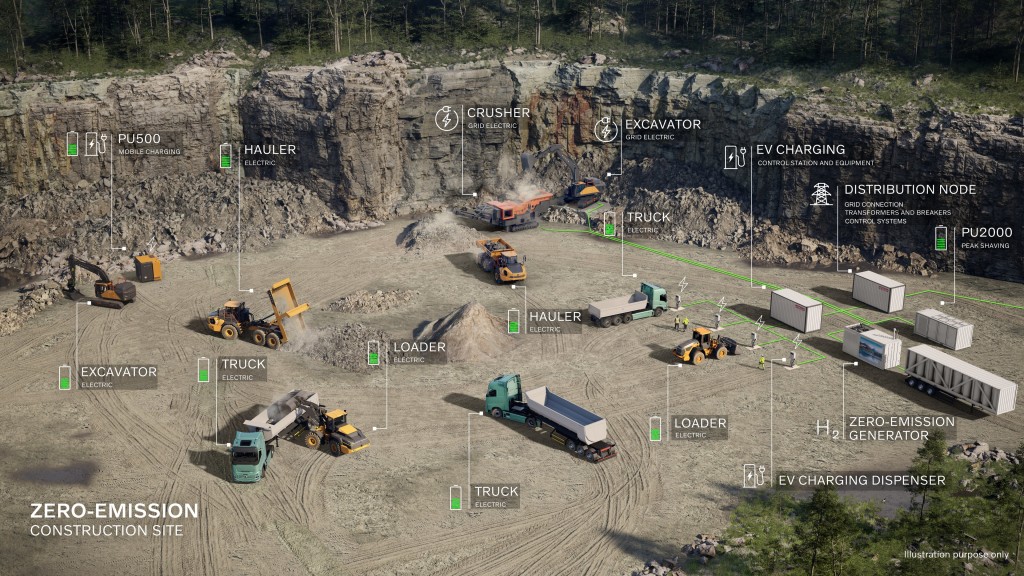
Hitachi Energy and Volvo Construction Equipment have signed a Memorandum of Understanding (MoU) to collaborate on developing end-to-end approaches supporting the deployment of zero-emission construction sites. The collaboration brings together electric construction equipment with clean power supply, energy management, and system integration capabilities to help address one of the construction industry's most pressing challenges: decarbonization.
Decarbonizing the construction site of the future with a complete solution
Demand for lower-emission, more productive construction operations is reshaping the industry. At the same time, regulatory and permitting frameworks increasingly require projects to address emissions and environmental performance throughout the planning and approval process. While electrification, automation, and efficient resource and asset planning offer clear pathways to reduce emissions, transitioning from individual electric machines to fully functioning zero-emission construction sites requires a coordinated ecosystem of solutions and effective system integration across equipment, power infrastructure, and energy management systems.
Under the agreement, Volvo CE and Hitachi Energy will work on a non-exclusive basis to assess potential technical and commercial concepts supporting zero-emission construction and manufacturing operations, with a focus on system integration and site-level operational execution. The scope includes joint work on business models, go-to-market approaches, and aftermarket and support considerations, supported by joint teams from both companies.
Volvo CE has previously deployed fully electrified fleets in targeted industries to prove the possibility of sustainable urban development with zero emissions.
The collaboration focuses on deep technical engagement in an evolving industry
Zero-emission construction requires a coordinated ecosystem of solutions and seamless integration between machines, electrical infrastructure, and energy management systems.
"Strategic partnerships such as this with Hitachi Energy are key to accelerating the transition to zero-emission construction," said Melker Jernberg, president of Volvo CE. "By combining complementary expertise and delivering a complete, integrated solution, we are giving customers the confidence, security, and peace of mind they need to adopt emission-free operations today."
"Electrification is a game changer in the decarbonization puzzle, particularly for hard-to-abate environments such as construction sites," said Niklas Persson, CEO of Grid Integration at Hitachi Energy. "As construction operations become more electric and more complex, success depends less on individual technologies and more on system-level integration, strong execution, and close collaboration with partners like Volvo CE who share our ambition to enable zero-emission construction at scale."
The initial focus is business and go-to-market-oriented, emphasizing practical, plug-and-play approaches to help customers simplify the transition to zero-emission construction sites. At the same time, the agreement establishes a foundation for deeper technical engagement over time, with the potential to explore more advanced capabilities, including connected machines, digital integration, and expanded service offerings.