
Komatsu expands the power of IMC to a smaller excavator platform
The PC158USLCi-12 is the first tight-tail-swing excavator with factory-integrated Intelligent Machine Control
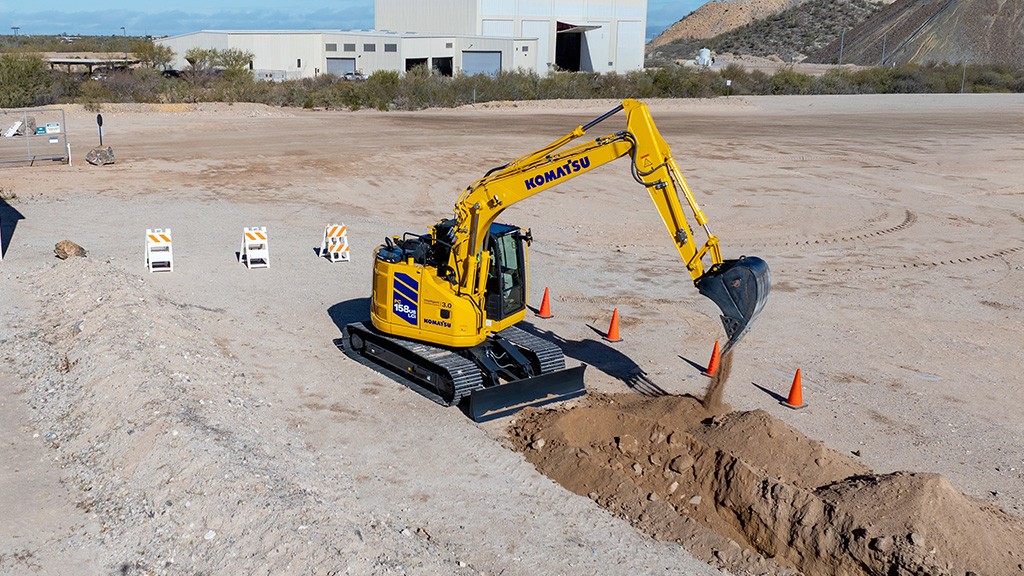
When the PC158USLCi-12 comes to market later in 2026, it will be the first tight-tail-swing Komatsu excavator with factory-integrated IMC (Intelligent Machine Control) and the second excavator with IMC 3.0. This is a game-changer for contractors who want the benefits of advanced automation on space-restricted job sites.
Komatsu's most advanced technology package ever
SMS Equipment Smart Construction Operations Manager James Barr can't wait for Canadian contractors to get their hands on the new PC158USLCi-12, which was previewed at CONEXPO-CON/AGG 2026. Barr has been representing the Canadian Komatsu dealer since the first IMC excavator was introduced in 2014.
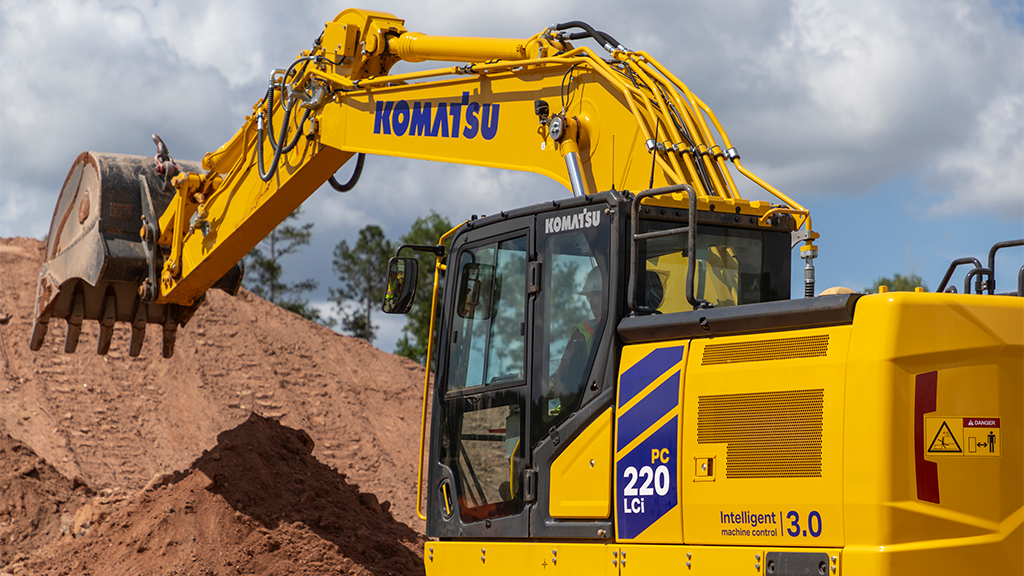
IMC 3.0 debuted on the PC220LCi-12 in 2025, and reception from owners and operators has been very positive, says Barr.
"Operators are telling me it's incredibly responsive, quick, and accurate. While technology in equipment is evolving, they see IMC 3.0 in particular as a major step forward for construction automation."
Expanded in-field design capability, an advanced payload meter, auto swing, advanced attachment settings, swing-to-line, 3D boundary control, and auto stop control are all new to IMC, but IMC 3.0 is also designed to evolve further. Komatsu can send even more new features to machines in the field via over-the-air updates and recently pushed travel-along-line to IMC 3.0 machines.
Barr explains, "In a pipeline ditch application with a 3D design, you can tie the machine to the centre of the ditch in the plan and use the thumb control wheel to travel in reverse. The machine will stay directly centred, so even if the ditch curves, the machine follows and steers to that curve and always keeps you centred."
The operator just has to focus on digging. Travel-along-line pairs nicely with IMC 3.0's swing-to-line function, which automatically swings the bucket to the line specified in the 3D plan.
Barr also praises the safety features new to IMC 3.0. A big one is the 3D boundary control system that allows the operator to set fixed height, depth, and swing boundaries tied to GPS coordinates, not the machine. Those boundaries do not move, ensuring that the machine can't penetrate them, even if the operator tracks and returns.
The takeaway from IMC 3.0 on the PC220LCi-12 is that operators are more precise, the machine requires fewer inputs, and the job site is safer. Now there's an appetite for more machines with the latest IMC package, says Barr.
"Contractors say, ‘It's a great product, but when are you going to release a zero-swing or tight compact excavator with the same technology?'"
With the PC158USLCi-12, Komatsu is satisfying that request.
A tight-tail machine designed for operators
Built on the foundation of the PC138USLC-11, the PC158 will be slightly heavier and available in two versions: a standard PC158USLC-12 without IMC 3.0 and the PC158USLCi-12 with IMC 3.0. Preliminary operating weight, which may change at launch, is 35,715 pounds.
Komatsu has moved to EH controls with its -12 excavators, which facilitates easier technology integration. Track steering, programmable buttons, swing priority settings, and work speed settings are all more easily incorporated with EH controls. The operator can also customize the controls to match their operating style, reducing fatigue and increasing efficiency.
Beyond the controls, attention to the operator experience is vital, says Barr. When operators don't like something, they'll say it. He saw strong, positive reception to Komatsu's switch from a sliding door to a swing-open door at CONEXPO and notes that addressing these preferences, even if they seem like minor details, is important to the operators who use the equipment every day.
Barr is also impressed by the comfort improvements that have been incorporated across Komatsu's recent equipment launches. The PC158's new wide-profile cab with increased visibility has a multifunction seat that is adjustable to give operators plenty of options.
"Everyone's built differently," he says, "and the different seat adjustments and positioning can make operators of all sizes comfortable."
For contractors seeking a machine with some advanced technology, but not the whole 3D package, the standard version of the PC158 includes 2D grade control, 2D boundary control (boundary control tied to the machine, rather than job site GPS coordinates), bucket payload monitoring, KomVision 360° with human and object detection, an 8-inch touchscreen, and joystick travel.
The equipment landscape is competitive, and that standard technology package for the base machine will deliver value to contractors, says Barr. "There's nothing better than having 2D when digging a basement. You set the benchmark, you cut it down however many metres you need, then you move around that. It's perfect every time."
Advanced technology for more applications
With the PC158USLCi-12, Komatsu has stepped up to offer advanced automation on a smaller platform, and Barr is thrilled to introduce it to Canadian customers later this year. He expects the machine to do particularly well in Canada on utility and residential job sites.
"It's hitting that need for a grade control machine that can work in tight quarters. Those customers who need that compact unit will have the full benefit of Komatsu's most advanced excavator technology."
This article originally appeared in the May/June 2026 issue of Heavy Equipment Guide.