
Is Equipment as a Service the future of your fleet?
Get access to the equipment you need while the manufacturer and dealer handle maintenance, repairs, and life cycle management
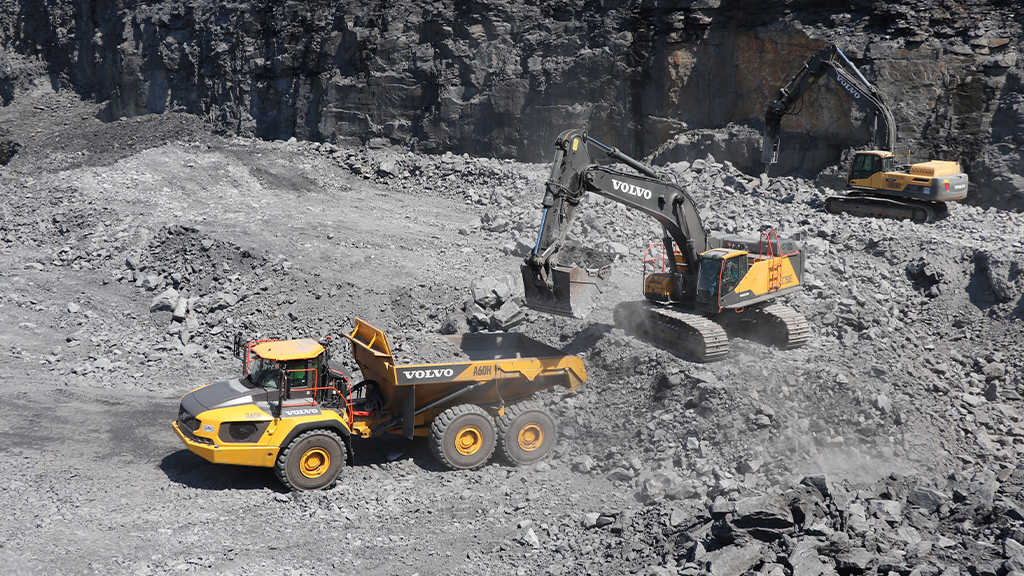
The reality of fleet ownership is that you're basically running two businesses: the one that makes money — prepping sites, installing utilities, or mining commodities, for example — and the one that costs money — equipment service and repairs.
For many companies, a significant amount of time and energy is spent managing that second one, stressing over parts availability, mechanics' hours, and the costs of unplanned downtime.
The methods of acquiring machines haven't really changed for a long time: buy, lease, or rent. But a fourth option is gaining traction and fundamentally changes how contractors and producers can think about heavy equipment ownership. It's called Equipment as a Service (EaaS).
The name may sound complex, but it's a very practical option. You buy the use, not the iron. And, for the right operation, it can be the difference between struggling with downtime and guaranteeing production.
What is Equipment as a Service?
You can think of EaaS like a metered utility. When you flip a light switch, you don't own the power plant — you just pay for the electricity you use. With EaaS, instead of buying machines, you purchase a block of fleet operating hours. You pay when you use the machines, not to own the steel and rubber itself.
In a typical EaaS agreement (like the ones we structure at Volvo CE), you get access to the fleet you need while the manufacturer and dealer retain ownership and responsibility. They handle the maintenance, repairs, and life cycle management. You simply provide the operators and fuel.
You might think this sounds like renting, but EaaS differs significantly from traditional methods:
- Renting is an operating expense (OpEx) that's usually short-term and based on individual machines. Costs are fixed each month, but maintenance and repair costs are either limited or not included. Using more hours than agreed upon will result in additional fees, while using fewer hours than expected means you lose money.
- Leases are also tied to individual machines with fixed costs each month, but for longer terms. According to current accounting standards, leases are a capital expense (CapEx) with added costs and taxes, impacting your balance sheet. The burden of maintenance and repair falls to either you or the dealer.
- Purchasing requires a significant upfront investment (CapEx) and impacts cash flow for a long time. It may take years to see a return on the initial investment, not to mention that all maintenance costs and repair scheduling are on you, and resale values could tank.
With EaaS, the script is flipped. It's a long-term, fleet-based usage contract that qualifies as an operating expense (OpEx), freeing up your capital. The supplier (dealer or OEM) performs regular service and handles repairs if a machine breaks down. This effectively guarantees uptime: They are incentivized to keep your machine running because you only pay when it works. The "ownership" piece of traditional O&O costs shift to the "operating" side only.
What makes this model worth a look
The primary benefit here is risk transfer. In a traditional acquisition model, you own it all: the asset, the risk of catastrophic failure, resale value fluctuation, and maintenance cost inflation. But with EaaS, the supplier owns all of that, absorbing the risks along the way.
Other key benefits include:
- Cash flow alignment: The more you work, the more it costs — but working more means you'll generate more revenue as well. If you aren't working (and thus, not billing clients), your fleet expenses drop. This is a huge advantage for fleets doing seasonal or project-based work.
- Guaranteed uptime: Because the supplier owns the fleet, they often include an availability guarantee. If a machine goes down, they begin losing revenue immediately. So they fix it or replace it quickly, often with financial penalties on them if they fail. This also reduces your need to keep spare machines around.
- Technology access: The fleet you use can change over time, so you're not locked into fixed production capacities or technology that ages. You're constantly cycling into newer, more efficient machines without the hassle of rebuilding or selling the old ones. And your staff doesn't have to keep up with new tech because support is included.
A real-world example
To understand the impact of EaaS, consider Bettencourt Dairies. While it's an ag operation, the demands on their fleet mirror the high-cycle environment of other production operations. As one of the largest dairy operations in North America, they have over 65,000 cows across nine locations. They rely on a large fleet of wheel loaders running up to 14 hours a day to feed the herd and maintain facilities.
Rick Onaindia, the CFO at Bettencourt, told us that before EaaS, they were constantly shuffling leased units around to avoid going over hour limits and struggling to manage maintenance schedules. It was noise that distracted them from their actual job of producing dairy products.
They transitioned their fleet to Volvo CE wheel loaders under an EaaS agreement and now, instead of managing depreciation schedules and mechanic availability, they focus on their business. Volvo CE and their local dealer monitor the fleet, handle all service, and ensure that the wheels keep turning. Essentially, they were able to trade upkeep for uptime.
Is EaaS right for you?
While I'm a big believer in this model, I'll be the first to tell you that it isn't for everyone.
You should consider EaaS if:
- You have high, predictable utilization (averaging 1,200+ hours a year) over a long period.
- Your fleet is critical to production — uptime is very important, if not vital.
- You want to get out of the repair shop business and reallocate technicians and inventory to more value-adding areas.
- You prefer OpEx over CapEx for balance sheet health and more efficient cash flow.
You probably shouldn't consider EaaS if:
- You have short-term fleet needs or are unable to commit to longer terms (making renting a better fit).
- You have an incredibly robust, low-cost internal maintenance infrastructure and fleet competence that you want to keep using.
- You only need one or a few machines. The benefits of EaaS compound as fleet size increases.
- Your fleet sees a high frequency of accidental damage. While EaaS covers maintenance, it isn't a catch-all for damaging operational conditions or operator error.
What to expect with EaaS
If you decide to explore this route, expect a conversation, not just a price tag. Because this is a long-term partnership, the process starts with a deep dive into your operation.
At Volvo CE, for example, we look at your site conditions, your operator habits, and your production goals. We then build a rate structure that includes the machine, maintenance, and an uptime guarantee to fit your needs.
Once the contract is live, expect transparency. You shouldn't have to wonder if a service was completed. In the case of Bettencourt Dairies, we have frequent touchpoints involving the customer, dealer, and Volvo CE to continuously review fleet health and utilization efficiency.
Ultimately, EaaS is a paradigm shift. It requires letting go of the idea that you need to own your iron to control your operation. Instead, you're bringing in a partner to manage a key cost element for you, transferring risks and sharing incentives so you can focus more on the revenue-generating side of your business.
As more contractors and producers are discovering, the most valuable thing isn't owning the equipment — it's using the equipment.
David Nus is head of fleet management — Region Americas at Volvo Construction Equipment. He leads the execution and growth of EaaS and related fleet solutions. Nus has been with the company for more than 21 years and previously spent 10 years with Hitachi Mining. He holds a bachelor's degree in engineering from Purdue University's School of Aeronautics and Astronautics.
This article originally appeared in the April 2026 issue of Heavy Equipment Guide.