
How modern aggregates processing technology is helping revitalize a First Nations community
Garden River First Nation expands its aggregates operation with an investment in Kleemann equipment
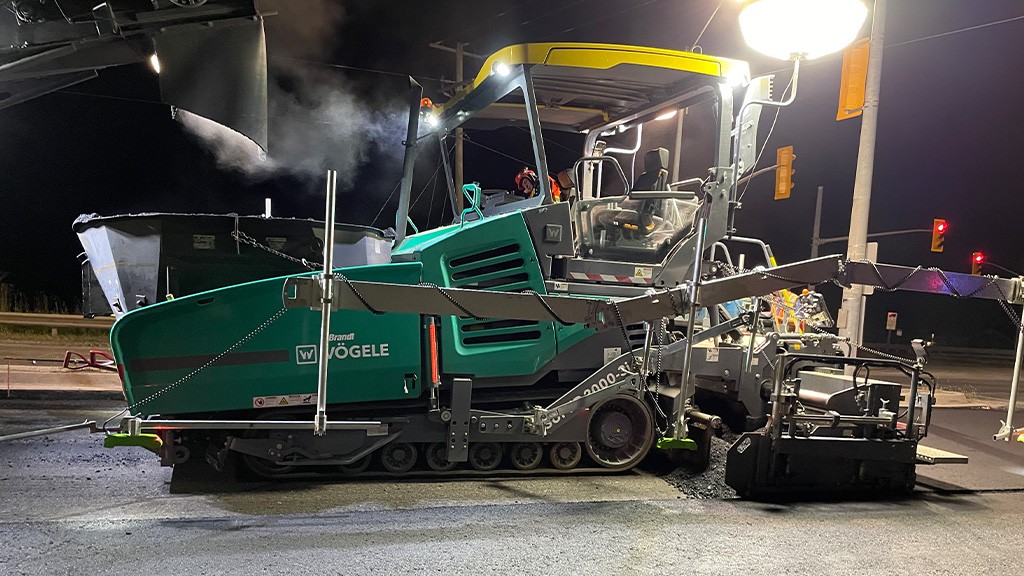
At 176 years old, Garden River First Nation, near Sault Ste. Marie in Ontario, is at the cutting edge of aggregates processing — a business that is proving to be a major economic engine that's helping to revitalize the community. For its most recent project, Garden River (Ketegaunseebee, in the Ojibwe language) is supplying aggregates for the 16 kilometres of Highway 17A that run directly through the reserve. The 34-kilometre highway serves as the Kenora Bypass for the Trans-Canada Highway.
The resurfacing is taking place from late 2025 to 2028 and requires close to 100,000 tonnes of gravel, 170,000 tonnes of Granular B type 1, and 100,000 tonnes of Superpave and asphalt dust.
"When we became aware that Highway 17A was going to undergo resurfacing and we were to be partnered into that project, we realized that our old crusher was too outdated and wasn't capable of producing some of the products like the Superpave," says Chris Morettin, business entities manager for Garden River First Nation. "We needed to replace that model with something brand new that had the capabilities to meet Ministry of Transportation requirements."
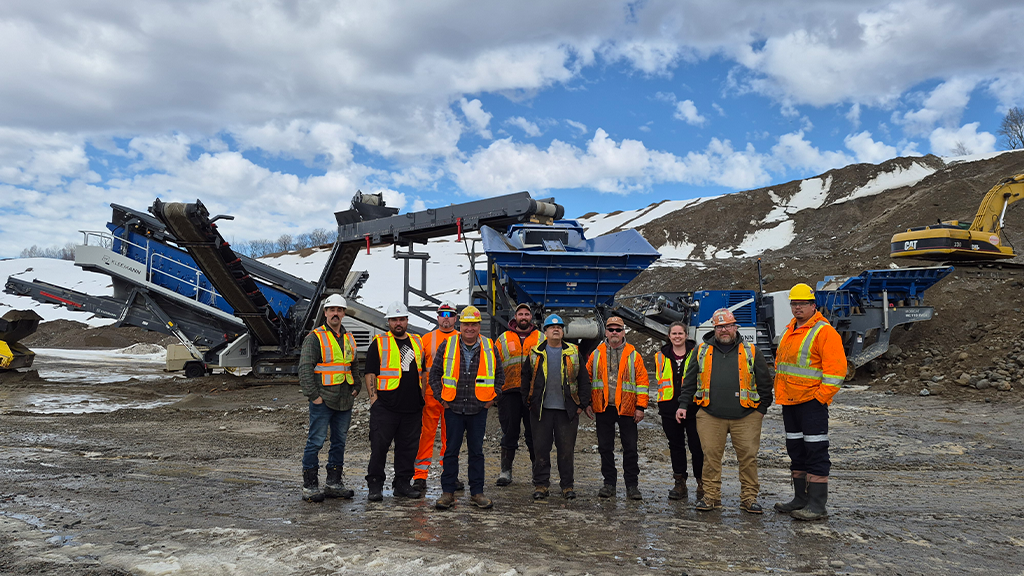
Their two-decade-old impactor required constant maintenance and couldn't keep up with the operation's demands. Morettin and Travis Belleau, aggregate supervisor, started doing research on newer crushing technology. In spring 2025, they decided on a Kleemann system: a jaw crusher, two cone crushers, two screen decks, and a stacker.
"We conducted a financial analysis based on revenues that were going to be generated. We were able to see that purchasing this equipment would pay for itself over the life span of this project," says Morettin.
Impactors vs. compression crushers
While impactors have high reduction ratios and create a quality dense, uniform cubical product, they also have increased wear and maintenance costs due to the high-impact nature of the crushing process. This leads to greater operating costs per tonne. They are also less efficient than compression crushers when processing hard, abrasive materials like granite or quartz, which can accelerate wear part failure.
On the other hand, compression crushers — like the Kleemann jaw crushers and cone crushers used on the Garden River First Nation — have lower maintenance costs. Because they crush by pressure rather than high-impact velocity, they experience less wear and tear, resulting in lower operating costs per tonne. This also means they are well suited for handling hard, abrasive materials. Jaw crushers also offer high reduction ratios (often 3:1 to 6:1), allowing for significant size reduction in a single pass.
"Northern Ontario has a lot of hard rock, and the harder the rock, the more damage there is to an impactor. That's why we typically see a lot of jaw cone spreads in this geographical area. They're just more cost effective," says Richard Perzan, vice-president of sales — construction and forestry (central) at Brandt, the dealer that worked with the First Nation through the process of selecting and purchasing the Kleemann system.
A compression crusher set-up includes multiple machines for three stages of crushing: the jaw crusher takes large rocks and reduces them to a more manageable size, the first cone breaks them down further, and a final cone creates an even smaller product.
The compression crusher output is also far greater than an impactor. Belleau noted a huge difference when they made the switch: "On a good day, we might have been able to get 60 tonnes an hour with the impactor. Now we can get upward of 200 tonnes an hour. That's huge."
Intuitive, modern, and safer
In addition to being fuel efficient — they're diesel-electric — Kleemann machines are intuitive to operate, according to Belleau. "I haven't been crushing very long. This is actually my first job ever crushing. I found it fairly easy to learn, and I think that speaks volumes," he says. "They're also very modern. What I like most is the touchscreen, which has tons of information on it."
Belleau appreciates not only the intuitiveness of the touchscreen, but also how it helps troubleshoot problems. "Our old machine didn't have a touchscreen, so you would just have to trial-and-error everything. These machines, they can pinpoint what's wrong, so you're not just swapping everything out to try and Band-Aid a problem. You're able to diagnose it quickly, have the part replaced, and then be back up and running as soon as possible. That's a huge asset," he says.
The touchscreen also identifies problems in an illustrative way to make fixing them even easier. "There are diagrams on the buttons that correlate exactly with what the machine part looks like. Easy to match things up with what's on the screen and what's happening in the machine itself. You'd never know where to look if it didn't have those diagrams," Belleau explains.
The safety features are also important to the crew at Garden River. "We appreciate the way the machine protects itself. It actually sirens it off to warn you, and you walk over and diagnose the code. The safety factor that is built into the machines has been instrumental to helping us to learn and understand the machines and keep them running longer," says Belleau.
Perzan explains that the Kleemann machines have technology that allows them to talk to each other, which also protects the machines. "There are sensors when the cone starts getting too full that slow down the jaw feed system. And, because of the touchscreen, there are fewer manual adjustments. All adjustments can be made on the screen instead of manually, which makes it safer for operators."
Mobility matters
Another factor that sets Kleemann machines apart from the competition, Perzan says, is their mobility. "They're track machines, so they're easy to move around. Set-up is very quick, and they can be moved around if there needs to be re-set-up on the site. Some competitors are chassis machines, which means you have to wheel a truck in and hook it up to the machine to move it. The Kleemann models are remote control and independently mobile."
Belleau is impressed by how easy it is for the machines to go from production to transportation. "You just turn on the remote, flip the key, press the button, and let it do its start release. Ten seconds later, you're walking the machine wherever you need it. It's not stationary like the old machine that had to have everything brought to it. If we find a better spot in the pit to work, everything else can be moved. It's on tracks and can be hauled over to a new spot, ready to set up the next day."
Construction projects revitalize the community
The Garden River First Nation has 3,500 band members, with just over 1,000 people living on the reserve. They employ approximately 200 people in their community, with 13 currently working on the aggregates operation.
Because aggregates are such an essential part of construction of both roads and housing, increased production made possible by newer compression crushers means more revenue and jobs for the community.
"We're trying to bring in more revenue to reinvest in the community. Our chief and council use it for programs or to revitalize the community, like maintaining our roads. We've been opening up new subdivisions, which hasn't been done for years," Belleau says. The band built 20 new houses last year, supplying all the aggregate themselves, and they're opening up two more subdivisions soon. "That gives us more work for the community and makes it possible for more people to move back."
The resurfacing of Highway 17A opens up work not just in aggregates, but also in roadbuilding — heavy equipment operators, labourers, surveyors, and more. "We're also getting into blasting soon, which will create even more jobs. And, as our operation gets bigger and bigger, more people can move back to the reserve to fill those roles," says Belleau.
Highway project is a route to economic self-determination
The Highway 17A resurfacing project represents more than just an infrastructure upgrade, it's a testament to how strategic investment in modern technology can drive economic self-determination and community growth. By choosing equipment that offers superior efficiency, lower operating costs, and greater output capacity, Garden River First Nation has positioned itself not just to meet current contract requirements but also to compete for future opportunities in the aggregates sector.
As Garden River First Nation continues to expand its aggregates operations and move into blasting, the foundation laid by this Kleemann system investment will support the community's growth for years to come.
"Our current aggregates team is exceptional — from the foreman to the operators to the skilled labourers and scale house reps — and we also look forward to adding even more members as we move forward," says Belleau.
At 176 years old, Garden River is proving that honouring tradition and embracing innovation aren't mutually exclusive — they're the formula for building a thriving, self-sustaining future.
Sabrina Cataldo is a senior copywriter at Brandt.
This article originally appeared in the April 2026 issue of Heavy Equipment Guide.
Company info

6030 Dana Way
Antioch, TN
US, 37013
Website:
wirtgen-group.com/america/en-us/products/kleemann
Phone number:
(615) 501-0600