
(VIDEO) How Finning rebuilds Cat D11 dozers in Regina
Finning recently completed its 100th D11 LTTT rebuild
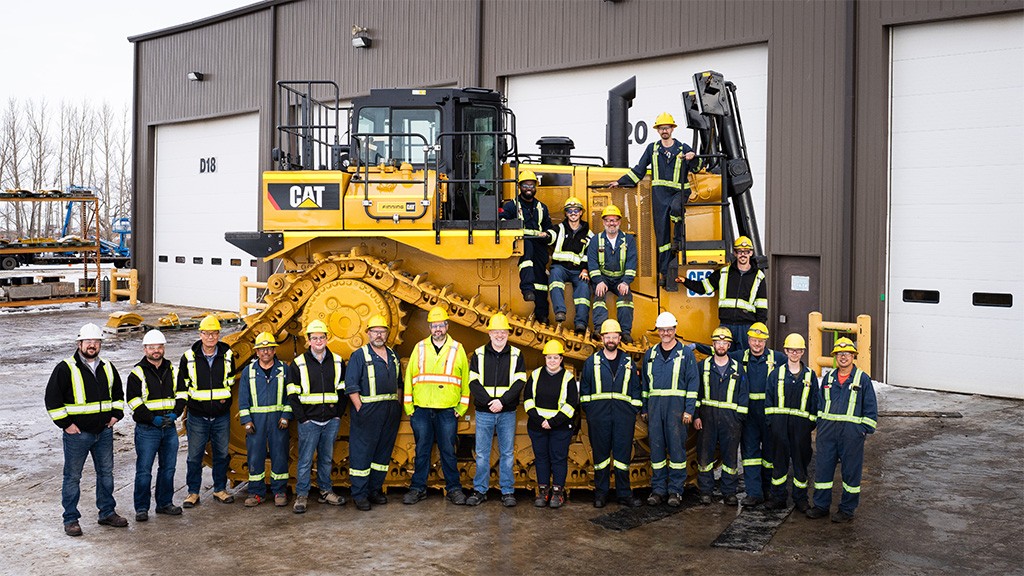
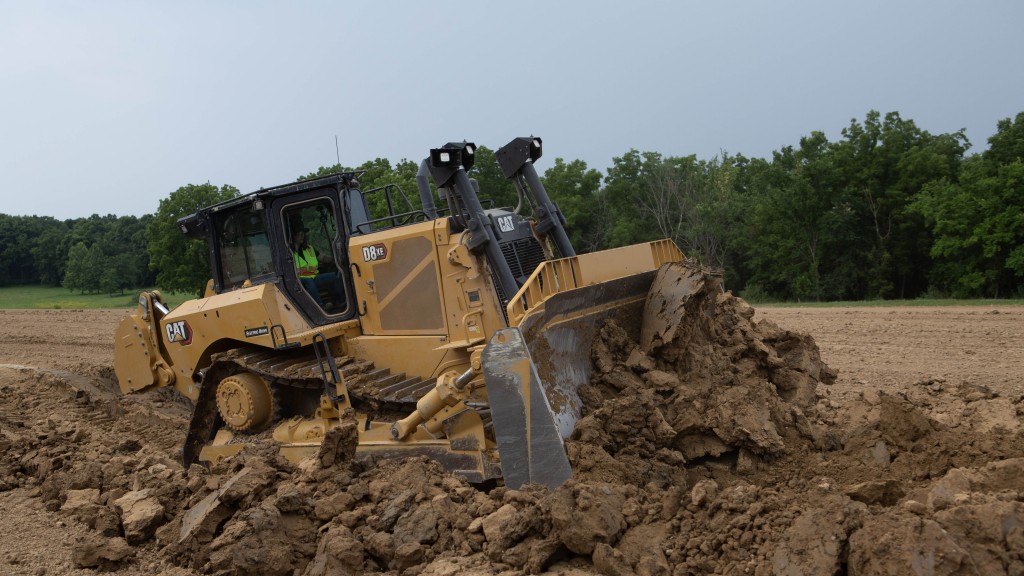
Launched in 1986, the Cat D11 large track type tractor (LTTT) forever changed the market for big dozers. Initially introduced as the D11N and weighing over 200,000 pounds with a 770-hp engine, Caterpillar has since cycled through several product improvements and iterations including the N, R, T, and now next-generation series.
Built in Peoria, Illinois, the D11 still stands as mining's most popular dozer, and well over 40,000 Caterpillar LTTTs, which include the D9, D10, and D11, have been built to date. You can find the D11 in coal, gold, oil, aggregate, iron ore, copper, and many more mines around the world.
The next-gen D11 dozers are powered by a Cat C32 diesel engine producing 850 hp with the tractor itself measuring 10.4 metres long, 3.6 metres wide, and 4.5 metres high, with a total weight of 248,500 pounds when configured with a 45-cubic-yard U blade. With open pit mines growing in size as demand for critical metals heats up, it's no wonder the D11 is the dozer of choice for many mining operations to match their fleets of ultra-class haul trucks and loading tools.
It's also not uncommon to see older generation tractors still in service alongside newer models, a testament to Caterpillar's "Built to be rebuilt" philosophy and successful Cat dealer-led rebuild programs around the world.
A legacy of Caterpillar service in Saskatchewan
Finning was founded in 1933 by Earl B. Finning in Vancouver, B.C., with a simple motto: "We service what we sell." Today, Finning is the largest Caterpillar dealer in the world with 15,000+ employees globally and branches throughout Western Canada, Argentina, U.K. & Ireland, Bolivia, and Chile.
The origins of Finning's Regina dealership, which today services and rebuilds the Cat D11, date back to 1928, when a downtown Regina Caterpillar dealership was founded by Albert Olson. The Kramer family purchased the business from Olson on June 1, 1944, and operated under the name Kramer Tractor Ltd, relocating to Regina's warehouse district. In 1977, Kramer Tractor relocated again to an 11 service bay facility with additional yard space in the north end of Regina, and in 2015 Finning acquired Kramer Tractor, bringing all of its facilities, people, and expertise under the Finning name. The Regina branch has since expanded to over 30 service bays, which include welding and machine shops, an engine and transmission dyno test bench, a hydraulic cylinder shop, a paint bay, and more.
How the D11 large track type tractor gets rebuilt
Finning's Regina branch has long specialized in the D11, and recently completed its 100th D11 rebuild. That machine also happened to be the 40,000th LTTT built by Caterpillar in Peoria. This milestone also represents roughly 230,000 person hours Finning has dedicated to rebuilding the Cat D11 in this facility.
Cat equipment is built to be rebuilt, and Finning's branch network operates as a coordinated system where specialized facilities, like the Regina facility, handle complex rebuilds while other branches focus on response and repair work and rebuilds on other equipment types. For customers, this means access to the right expertise for every job no matter where they are located.
The dozers arrive at the facility — visibly tired as evidenced by the undercarriage, worn down paint, and general condition of the machines — and that's when the rebuild process begins.
Depending on the customer's maintenance program and operational objectives, a dozer is selected for rebuild in the 12,000 to 16,000 frame-hour range, which is denoted by the service meter reading. "Frame hours" refers to the total hours on the frame. While components are rebuilt and become "0 hour," or new, after that rebuild, the frame carries the total hours accrued by the machine, no matter how many times it is rebuilt. A piece of equipment is commonly referred to as having "lives." This simply refers to how many rebuilds the machine has gone through: a first life stretches from new to the first rebuild, with the second life being between the first rebuild and second rebuild, and so on.
To start the rebuild, Finning fully washes the tractor, then rolls it into one of the service bays for an incoming Technical Analysis Level 1 (TA1) inspection to identify any previously un-noted incoming damages or deficiencies. From there, Finning goes to work completely disassembling the tractor following Caterpillar's Service Information System (SIS) guidelines to strip the tractor of all components down to a bare frame, dispersing the components through their shop for reconditioning.
Comprehensive testing finds defects for repair
Once the dozer is stripped of all major components, the bare frame is left for inspection. Depending on customer requirements, Finning either performs Non-Destructive Testing (NDT) or a thorough visual inspection to identify frame cracks for repair. Cracks or defects are then gouged out and welded to complete the repair, with special care taken to follow pre-heating and cooling treatments to ensure the repaired metal cures properly on the cast iron frame. Items like frame wiring harnesses are also inspected and replaced.
For rebuilds on large equipment like the D11 LTTT, Finning rebuilds 99 percent of components in-house and salvages most structural parts. But what determines when a component requires a rebuild? Caterpillar refers to components using a percentage factor relative to its design life. The component is designed to achieve 100 percent life and can often exceed that with stricter maintenance and operating programs.
Excluding a component failure, which immediately qualifies it for repair, measuring a component's life comes from both the service meter reading as well as the changeout history records attached to each machine. Generally, when a D11 comes into Finning's shop nearly every component is rebuilt.
Most components are rebuilt in-house
While there are many components on a D11 track type tractor, key components rebuilt in-house by Finning include engine and drivetrain, hydraulic cylinders, operator cabs, and undercarriage.
Hydraulic cylinders, like the hoist and tilt cylinders for the blade and the ripper cylinders, are rebuilt in Finning's cylinder bays. This includes full reseal of cylinders, honing out cylinder barrels, rebushing the ears, and inspecting the cylinder rod chrome for damage. Associated hydraulic hoses can also be built in-house or replaced with new.
There are very few components that Finning doesn't rebuild in-house. An exception is cylinder rod re-chroming and hydraulic pumps, which are completed by outside vendors.
With respect to the diesel engine, the C32 is stripped down to the bare block where key measurements are taken on cylinder heads, crank and cam bores, and each cylinder bore to determine if repair or boring and honing is required. For instance, if the cylinder deck height is out of tolerance and too low, spray welding builds up the cylinder head deck and a machine called the "Rottler," accurate to 1/10th of 1,000 of an inch, machines the cylinder deck back to OEM specifications. Once machining on the block is complete, cylinder liner kits are replaced alongside bearings, wiring harness, and more to fully reassemble the engine.
Before the engine can go back into the dozer, a bench test on a dynamometer is completed. The dynamometer uses fluid friction to simulate load on the engine. The force required to overcome this fluid friction is then measured to read engine horsepower, torque, and overall performance which is documented and compared to OEM specifications. Other driveline components, such as transmissions and torque converters, also undergo bench testing after the rebuild to ensure they meet OEM specifications before reassembly on the tractor.
One of the most important components on track type tractors is the undercarriage. With exception of the track group, comprised of rails and track pads, which is replaced with a brand-new track group, Finning rebuilds undercarriages in-house. The track frame as well as major and minor bogies are inspected for cracks and defects and are repaired as necessary.
Rolling stock, such as bottom or top carrier rollers, are replaced with new, while large items like front and rear idlers are rebuilt. The idler is first placed on a lathe to bring the worn, uneven surfaces true, then placed on an idler rebuild machine which uses two flux-cored arc welders to build up new metal on the surfaces where the undercarriage rails ride and wear. The process involves special pre-heating and cooling where the idler is placed in an insulated box to control the rate of cooling to properly cure the metal.
At any given time, Finning can have multiple D11s in the shop for rebuild, all at different stages. But, with all these components being rebuilt in-house, how does Finning have all the parts ready for comprehensive rebuilds?
Finning's warehouse team builds parts lists for each rebuild using a 30-180 parts stocking outlook and strategy. To organize parts for each rebuild, a colour coding system is used to separate parts for each dozer, which is further broken down into segments to group parts in individual boxes. Each D11 rebuild has 177 segments which translates into a lot of parts and boxes, hence why robust parts stocking and organization is key to ensure parts are readily available no matter what phase or segment each D11 rebuild is in on the shop floor.
The D11 is reassembled for its next life
Reassembling the dozer is not much different from disassembling the dozer — everything is done in reverse order. As components are reconditioned, they are returned to the dozer for re-installation. And, as components like the engine, cab, hard nose, track frames, and track group are reattached to the machine, it begins to look like a D11 again.
While individual components such as engine, transmission, and cylinders are bench tested to ensure they meet OEM specifications, all components working together in a system must be tested as well. Finning completes full operational testing of all the dozer's systems in their yard through basic operation of the machine.
Once testing is complete, the dozer is rolled into Finning's paint bay for final painting and decal application. Matching the original trade dress, the machine is sanded, masked, and painted, then original OEM decals are applied. The paint process for an entire D11 consumes less than 10 gallons of paint and takes only two days to complete. Knowing each customer has unique needs, Finning also completes finishing touches such as installing unit number decals, catwalk packages, specific lighting packages, dump horns, electronic illuminated unit number boards, ladders, auto greasers, and more depending on the customer.
What a rebuild accomplishes
The decision to rebuild large equipment requires heavy consideration of the inherent quality of an OEM's machine, meaning it must support first, second, third, and further life rebuilds. If the frame quality isn't there or support from the OEM is lacking, rebuilding may not be an option.
Rebuilds on large equipment, like the D11 LTTT, accomplish three main things. A rebuild extends the life of a machine by giving the customer a like-new machine able to work another 12,000 to 16,000 hours without buying new, it reduces future operating costs by providing 0-hour components with warranty, and it improves the reliability of the machine on site.
So why rebuild a machine when you can buy new? With demand for the D11 growing, lead times on new tractors can be quite long, while a rebuild takes 10 to 12 weeks or 2,400 person hours to complete, making the option to rebuild very attractive.
New equipment purchases also require large capital expenditures. A rebuild is a like-new machine with the same physical availability on site as new, but at half the cost of a new machine. With a proven track record of rebuilding over 100 Cat D11s, Finning's rebuild program has extended dozers to their seventh life mark with over 100,000 hours on the frame — a testament to not only Finning's rebuild program, but also Caterpillar's "Built to be rebuilt" philosophy.
Mack Plovie is the president and chief dirt enthusiast of Earthmovers Media.
This article originally appeared in the March 2026 issue of Heavy Equipment Guide.
Company info

16901 - 109 Avenue
Edmonton, AB
CA, T5P 4P6
Website:
finning.com
Phone number:
888-346-6464