
A guide to soil compaction and soil compactors
How soil compaction works and how to choose a soil compactor
For any construction project to stand the test of time, from a multi-story building to laying a new highway, a strong and stable base is non-negotiable. The strength comes from soil compaction, a fundamental process that must be completed before any concrete is poured or asphalt is placed. Compaction is the essential first step in preparing a pavement's foundation, ensuring the sub-base and road base layers can bear the traffic loads. By deploying the correct equipment and techniques, contractors create a densified, durable platform that is the literal backbone of a successful and enduring infrastructure project.
Understand the compaction process
In geotechnical terms, compaction is the mechanical process of increasing soil density by reducing the air-filled voids within the material, making the ground stiffer, less water permeable, and therefore more stable.
Maximum density is achieved when the soil contains an optimal moisture content, where the water acts as a lubricant to help particles rearrange into their tightest configuration. Consequently, when soil is too dry it is resistant to rearrangement. When it is too wet the voids fill with water reducing its stability. In Canada especially, during the freeze-thaw cycle water in voids freezes and expands causing pavement or foundation settling upon thawing.
The method of compaction is dictated by the material:
Compacting cohesive soils: For materials like clays and silty soils, the process involves reorienting the individual particles and expelling air until a predetermined target density is achieved. This prevents future settlement and ensures the ground can support the structural load. These soils typically require far more manipulation to knead and compact.
Compacting semi-cohesive and non-cohesive soils: For semi-cohesive materials such as sandy soils, and granular materials like crushed stone, sand, gravel, or recycled concrete, the goal is densification or the physical interlocking of the individual, angular particles. This creates a stiff, unyielding layer that provides superior structural support beneath the pavement.
How soil compactors work
Modern soil compactors primarily rely on three dynamic methods to achieve density: vibration, impact, and oscillation (dynamic kneading). However, compaction can also be done under static loading and/or by manipulation (kneading). Understanding the difference between these is essential for selecting the right tool for the job.
Vibratory compactors
A vibratory compactor is the most common workhorse. An eccentric shaft with unbalanced weights inside the drum rotates at high speed, generating an eccentric force. This force vibrates the entire drum, pounding the ground like a hammer and compacting deep into the soil layers.
This dynamic force, combined with the drum's static load, makes vibratory rollers exceptionally efficient. They are the go-to choice for compacting granular, cohesive, and mixed-material soils, quickly achieving the required density deep into the base layer.
Impact compactor
Impact rollers, rammers, and drop weights apply significantly greater impact loads in a short time at much lower frequencies and larger amplitudes than vibratory rollers, compacting deep layers.
Oscillatory (dynamic kneading) compactors
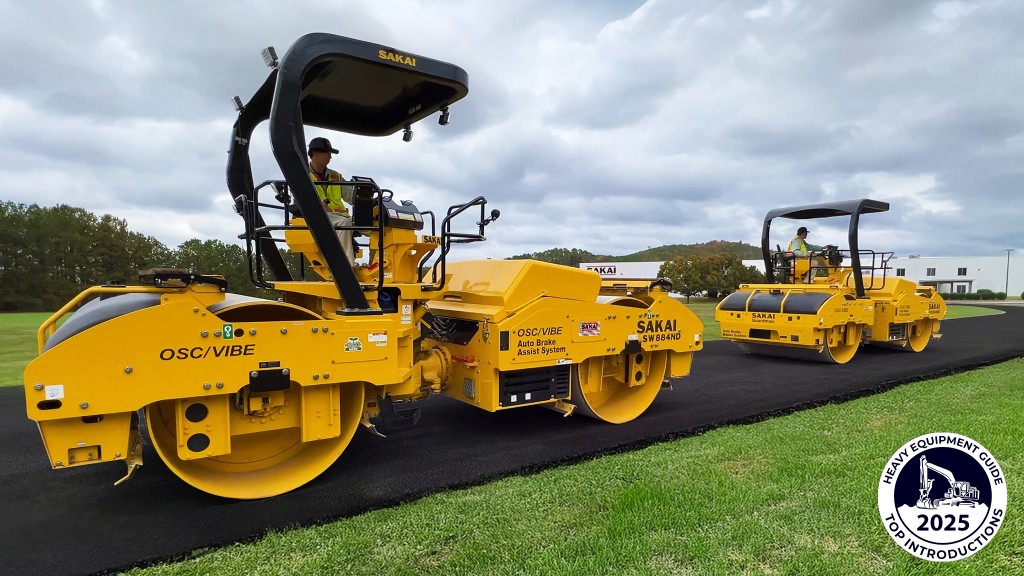
The oscillatory compactor offers a more delicate and versatile approach. Instead of a strong vertical vibration or impact, it employs a tangential, forward-and-backward motion that gently kneads the material.
This makes oscillation the ideal solution for compacting thinner layers or working in sensitive areas. These include sites with underground utilities, proximity to existing historical structures, or near residential areas where deep vibratory forces could potentially cause damage.
Static compactors
Compaction using static rollers is an old technique that dates to ancient Rome. Early rollers were horse/oxen-drawn, and the method evolved to steam power in the 18th century before being replaced with diesel power. However, the introduction of vibratory compactors around 1960 offered superior performance and led to the gradual decline of static variants.
However, static compaction is still used today for surface finishing work. This is because sites involving brittle materials or those with no-vibe requirements necessitate rollers with higher static linear pressure than that of vibratory compactors with the vibration simply switched off. Large static soil compactors with tamping drums are also employed on large embankment sites containing cohesive soils and for compacting core (clay) materials in rock-fill dams.
Pneumatic tire rollers
Static pneumatic tire rollers were revolutionary in the 1950s by allowing adjustment of wheel load and tire pressure; however, their need for heavy ballast made them cumbersome. They declined after the advent of more efficient vibratory rollers. Today, 8- to 25-ton models are used for final surface finishing (leveraging their static kneading effect), especially where vibration is prohibited. Modern advancements include uniquely vibrating the tires, such as on the SAKAI GW754, for deeper compaction and enhanced surface density.
Drum Types
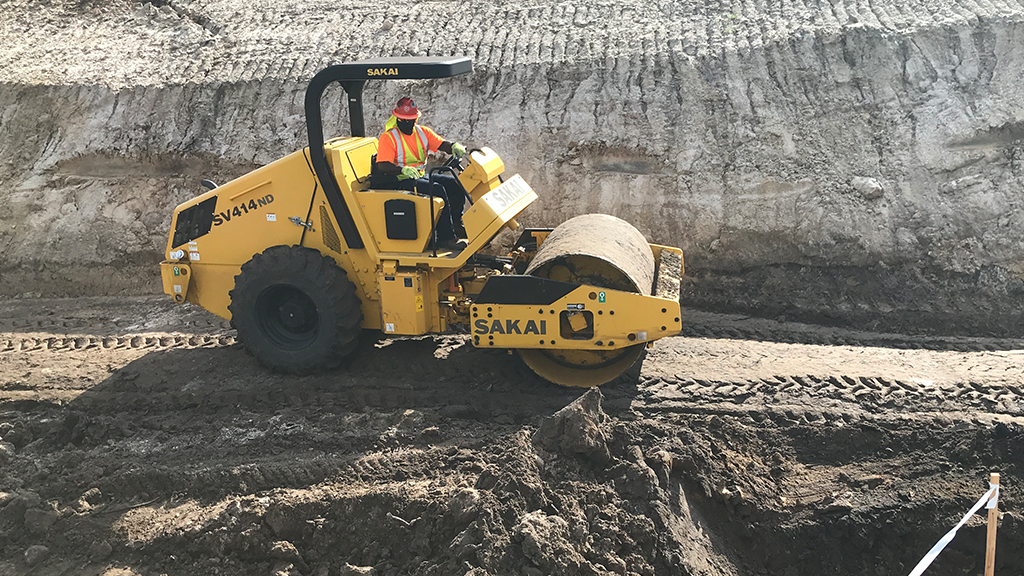
Single-drum soil compactors can be fitted with different drum types to better match the material type being compacted:
Smooth drum: Used for materials like sandy loam and aggregate base. The smooth surface provides uniform pressure and leaves a clean, finished surface.
Padfoot drum: Features numerous protrusions, or pads, that deliver a concentrated, kneading-type effect. This is essential for cohesive soils, such as clay, which require deeper penetration to break up clods and efficiently expel the air voids.
Drum shell kits: For contractors working in varying soil conditions, shell kits allow temporary conversion of padfoot-to-smooth and smooth-to-padfoot as the job dictates. A good scraper bar or teeth are essential to keeping the drums cleared of material to prevent damage and avoid downtime.
Choose the right soil compactor for the job
Selecting the best compaction equipment is an investment that dictates both project efficiency and the stability of the foundation or surface being laid. The decision comes down to these main variables: the characteristics of the soil on site, the size of the job site, and the sensitivity of the job site.
- A vibratory compactor is the default workhorse for large-scale jobs demanding deep compaction on thick lifts of most common soils.
- An oscillatory compactor offers unmatched versatility and is essential when compacting thin layers or working near sensitive utilities or structures where vibration is a risk.
- Single-drum machine sizes are commonly denoted in drum widths. A wider drum compactor covers more ground and produces more force but is less manoeuvrable. A smaller compactor is more suitable in narrow areas such as residential and trench work.
The basic key to successful soil compaction is remembering that the foundation's quality determines the project's longevity. In all cases, understanding the machine's capabilities and matching it to the material's specific requirements (with proper moisture content and tested operating conditions like the number of passes, speed, and vibration settings) is the final step to ensuring a long-lasting, high-quality result.
This article originally appeared in the January 2026 issue of Heavy Equipment Guide.
Company info

90 International Parkway
Adairsville, GA
US, 30103
Website:
sakaiamerica.com
Phone number:
1-800-323-0535