
New partnerships introduce RodRadar's Live Dig Radar to more countries
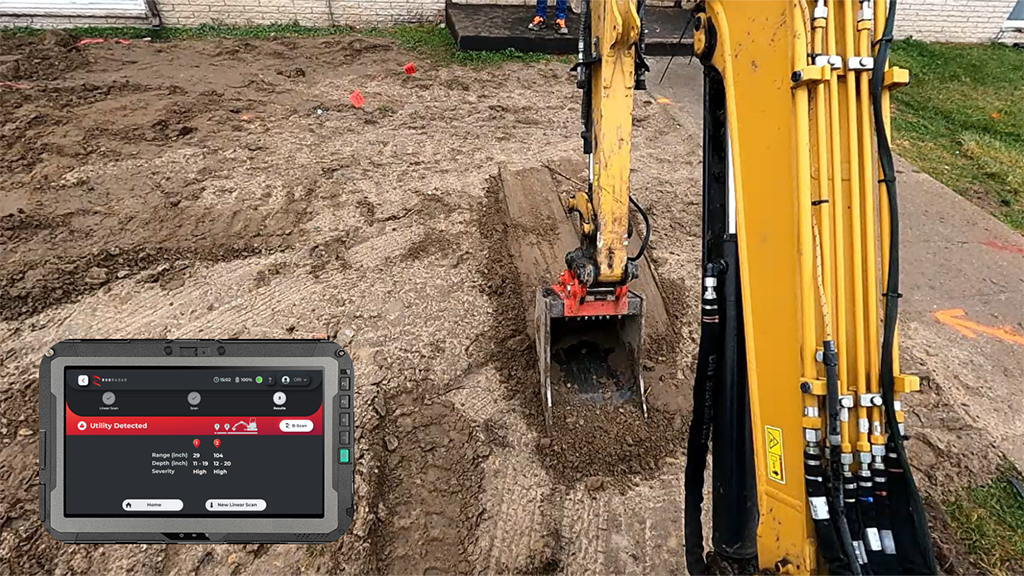
Live Dig Radar automatically detects and alerts operators in real-time to the presence of underground infrastructure during excavation
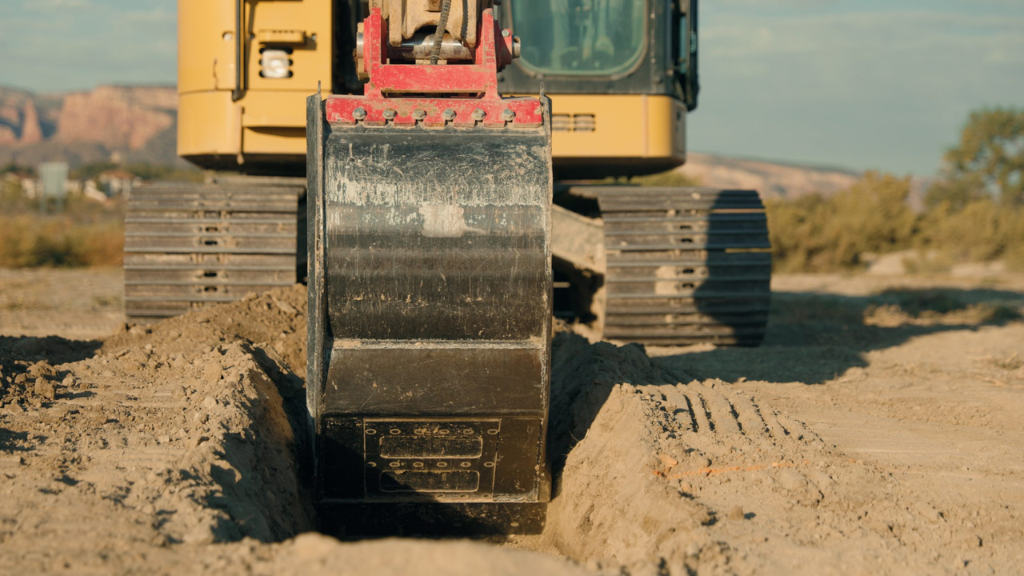
The TESYA Group, a provider of integrated B2B services and solutions present in various sectors, has entered into a strategic agreement with RodRadar, a tech-based company specializing in excavation safety operations and the prevention of accidents to underground public utility infrastructures.
RodRadar developed the patented Live Dig Radar (LDR) system, an innovative AI-based sensor integrated directly into excavation equipment. The technology automatically detects and alerts operators in real time to the presence of underground infrastructure during excavation operations, helping to prevent dangerous and costly impacts. Already used in several European countries, including the United Kingdom, Germany, and France, as well as in the United States and Australia, this solution will now be introduced in South East Europe by the TESYA Group, as the exclusive distributor of Live Dig Radar through its companies CGT (Italy), Alayan (Italy, Spain and Portugal), Teknoxgroup (Slovenia, Croatia, Bosnia and Herzegovina, Montenegro, Serbia, Kosovo, North Macedonia, Albania), STET (Portugal), Finanzauto, and SITECH (Spain). Synergy that will allow the Group, through its experience and consolidated presence on the market, to accelerate the adoption of RodRadar's cutting-edge security solution in the Old Continent.
Underground construction accidents remain a massive problem in older countries
In Italy, excavation activities are part of one of the most complex infrastructural contexts in Europe, where water, electricity, gas, sewer, and telecommunications networks extend for hundreds of thousands of kilometers — with 425 thousand kilometers of aqueducts and over 40 thousand of gas pipelines. In Lombardy, for example, on the occasion of Expo Milano 2015, over 230,000 square metres of underground infrastructure were mapped and significant discrepancies were found in the historical registers, with thousands of metres of unsurveyed infrastructure and an average geolocation error of 30 percent, which in some cases reached up to 100 percent.
Every year, around 100,000 accidents involving damage to underground public utility infrastructure are recorded in Germany, with excavation machinery responsible for almost 80 percent of these impacts. According to BG Etem, insurance companies in Germany pay out around 500 million euros per year for excavation-related damage. In the U.K., on the other hand, an estimated 60,000 underground infrastructure accidents cost the local economy around £2.4 billion a year. In such a complex scenario, also characterized by increasing urbanization, damage to infrastructure could generate consequences ranging from simple local interruptions to major accidents, with significant economic impacts: from the repair of pipelines and the restoration of the road surface, to the interruption of essential services, passing from the downtime of projects to inconvenience for citizens and businesses. In addition to these effects, there are environmental and social effects, due to losses of natural resources, gas leaks or damage to urban plants, which compromise safety and quality of life in cities.
TESYA and RodRadar know the value of intelligent construction solutions
"The agreement introduces a new generation of intelligent solutions to construction sites, capable of raising the standards of safety, productivity, and sustainability thanks to real-time operational analysis that allows to avoid damage and make excavation operations more precise and reliable. This is a real benefit for contractors, whose main problem remains downtime and project delays caused by accidents or damage to underground infrastructure. This innovation marks a step forward for the construction sector and represents a concrete contribution to the development of the country's infrastructure projects, which is committed in the coming years to completing the works of the PNRR and carrying out strategic works, from photovoltaic parks to data centers. In Italy alone, more than 23 billion euros of investments in data centres are expected by 2030: resources that will concern the construction, procurement, and filling of IT servers for new infrastructures, generating a significant impact on the national economy," commented Pierre-Nicola Fovini, CEO of the TESYA Group.
"RodRadar is driven by a clear mission: to offer operators an immediate and usable view of what lies below the surface during excavations," said Moshe Dalman, CEO and co-founder of RodRadar. "The partnership with a professional Group like TESYA allows construction companies and excavator operators throughout Italy and Spain to access our Live Dig Radar systems, allowing them to stop digging ‘blindly' and get closer to the goal of making bump-free construction sites an everyday reality".