
Conquer the cold with the correct winter maintenance procedures for your CTL
Keep your compact equipment reliable and productive all season with these five tips
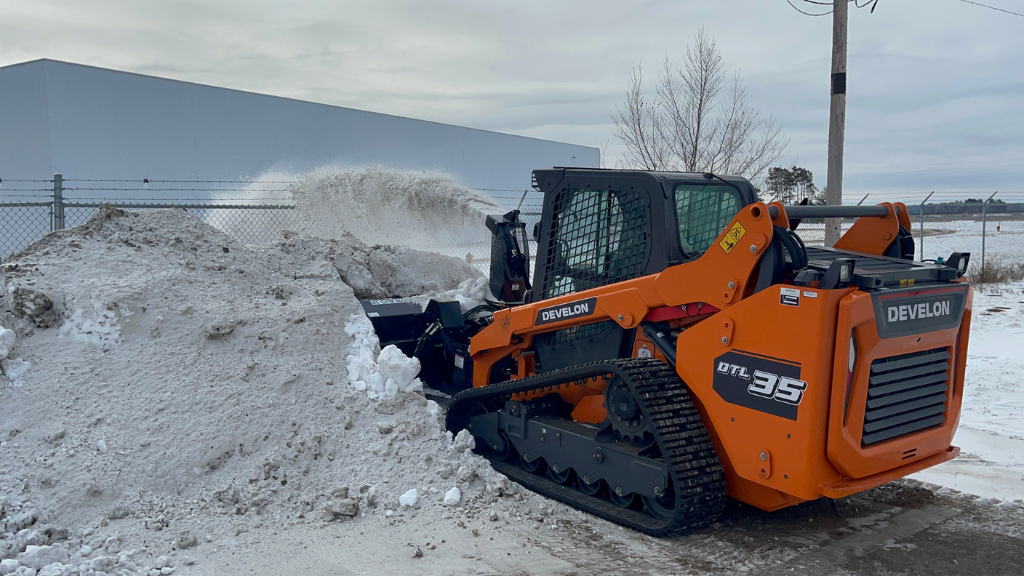
When cold weather hits and snow starts falling, a compact track loader (CTL) transforms into an essential tool for battling the elements and staying on schedule.
Operating a CTL in freezing temperatures requires more than just a warm cab. To keep compact equipment reliable and productive all season, check out these five tips for how to operate and maintain it this winter.
1. Check built-in features
Many CTLs are equipped with features that make working in cold temperatures easier and more productive. One type includes starting aids, such as engine block heaters and glow plugs. These components are essential for a reliable start because they preheat the engine and fuel system, which can become sluggish in the cold.
Pressurized cabs and heated air-suspension seats create a warm, comfortable environment, allowing operators to stay focused and productive during long shifts. This is supported by a robust electrical system, including a high-capacity alternator, which ensures that the battery charges quickly and can power all the machine's on-board technology and accessories.
Visibility is a top priority for safe winter operation when daylight hours are limited. Modern CTLs come equipped with powerful LED work lights to illuminate the work area.
"Features like heated mirrors, a rear-view camera, and op- tional around view monitor (AVM) camera system are crucial for maintaining visibility in snowy and icy conditions, helping the operator manoeuvre safely in tight or low-visibility areas," says Andy Jeong, compact equipment and dozer product manager at DEVELON.
The track system itself is also a major advantage for CTLs in winter. Unlike rubber tire skid-steer loaders, the tracks distribute the machine's weight over a larger surface area, providing superior flotation in deep snow and better traction on slippery surfaces like ice.
"For even better performance, many manufacturers offer specialized tracks for snow, such as those with a multi-bar pattern, which provide better grip than standard block patterns," says Jeong. "Wider tracks are ideal for improving flotation and preventing the machine from sinking in deep snow."
2. Switch to a winter-blend diesel fuel
One of the most common issues in winter is diesel fuel gelling, which can clog engine fuel filters. For low temperatures below -10 degrees C, a winter-blend No. 1 diesel fuel is recommended, as its lower gel point is effective in extreme cold.
"To better protect your fuel system, add a high-quality anti-gel additive before temperatures drop," says Jeong. "You should also keep your fuel tank as full as possible to minimize condensation, which can lead to water contamination. Regularly drain the fuel water separator and replace fuel filters as part of your routine maintenance."
Refer to your operator's manual for more information about compact equipment fuels for use during cold winter months.
3. Follow safe starting and thawing procedures
To protect a compact track loader's engine and hydraulic systems, it's crucial to follow proper starting and warm-up procedures.
"After starting the engine, let it idle for 30 to 60 seconds to build oil pressure," says Jeong. "Then, allow the machine to run at a low idle for 5 to 10 minutes, which gradually warms up the engine and hydraulic fluid. During this time, slowly cycle the attachments at a mid-throttle to circulate the hydraulic fluid. Wait a total of 10 to 15 minutes before beginning any high-load work to make sure all systems are fully warmed and ready."
Even after you've properly warmed up the machine, don't force a CTL to move when its tracks are frozen to the ground. This can cause significant, permanent damage to the drive, sprockets, and seals. If possible, park on a dry surface to pre- vent this from happening.
"Use a heating device to thaw the undercarriage," says Jeong. "The best way to avoid frozen tracks is to thoroughly clean all mud, snow, and debris from the undercarriage immediately after use, before the machine has a chance to freeze."
Check and adjust the compact track loader's tension frequently throughout winter to prevent premature wear and de-tracking.
4. Select the right attachments
Using the correct attachment reduces the number of passes needed, cuts down on fuel consumption, and minimizes wear on both the machine and the operator. Here are the most effective attachments for winter work.
Snow pushers: Designed with a wide containment frame and a rubber cutting edge, snow pushers are more effective than traditional buckets for clearing large areas like parking lots. Their design allows them to move large volumes of snow in a single pass with minimal spillage.
"Manufacturers like DEVELON offer a CTL snow pusher with a free-floating frame that allows the pusher to automatically adapt to uneven ground, reducing wear and ensuring a clean sweep," says Jay Patel, attachment product manager at DEVELON.
Snow and light-material buckets: Unlike standard dirt buckets, light-material buckets are taller, wider, and lighter, providing more capacity for low-density materials like snow. Some manufacturers offer snow buckets with windows in the frame for improved visibility.
Snow blowers: Snow blowers are highly effective at clearing large drifts and tight areas like narrow driveways or paths near buildings, as they throw snow away from the work area to prevent it from piling up. Consider a long discharge chute for a snow blower if you're loading snow into a truck.
Angle brooms: Angle brooms are ideal for lighter snowfalls (typically under three inches) on flat surfaces like sidewalks and parking lots.
"DEVELON offers electric-over-hydraulic controls for enhanced use with an angle broom and bi-directional sweeping action that provides a clean finish," says Patel. "The angle broom can be hydraulically angled to push snow away from the machine's tracks, protecting the cleared surface."
Before purchasing an attachment, always consult a local dealer to confirm that the attachment is compatible with your CTL.
"A frequent mistake I see is using a standard dirt bucket for all snow-related tasks," says Patel. "While it's versatile, a dirt bucket is often too heavy, smaller, and less efficient for large volumes of snow. For hydraulic-powered attachments, it's also important to verify the hydraulic flow and pressure and ensure the hookup style is correct."
5. Adhere to attachment maintenance best practices
To keep your attachments performing at their best during the cold months, Patel offers operational and preventive maintenance tips:
Match speed to working conditions: Going too fast can increase wear and reduce efficiency. Adjust your speed based on the density of the snow to avoid overworking the machine and attachment.
Frequently clean and inspect: After each use, clean all snow, ice, and debris from your attachments. This is especially important for removing salt and chemicals, which can cause corrosion.
Grease and lubricate: Perform regular (e.g., every 10 hours) checks to grease all pivot points and lubricate bearings. Use cold-rated grease specifically for low temperatures.
Check for wear: Routinely inspect key wear parts, such as the rubber edges and skid shoes on snow pushers, cutting edges and shoes on snow blowers, and bristles on angle brooms. Replace them as needed.
Inspect components: Pay close attention to hydraulic hoses for snow blowers and angle brooms. Look for cracks and leaks from the hoses. Operate the loader's hydraulics slowly to warm the fluid and condition the hoses. Following this process can help prevent hoses from cracking.
By following these tips, you can make sure that your compact track loaders and attachments perform at their best, maximizing productivity and minimizing downtime no matter how harsh winter gets.
This article originally appeared in the November/December 2025 issue of Heavy Equipment Guide.