
What idling does to your equipment and what to do about it
Save money and extend the life of your equipment with these simple operational changes
You know that an idling machine isn't making you money, but do you know how much it's costing you? And once you know, do you know what to do about it? Here's how this common job site practice can negatively affect your equipment and your business.
The impacts of idling
Many construction machines idle for more than half of their operating time. While it may seem like a harmless way to keep a machine ready to go, too much idling can compromise a diesel engine, which compromises your uptime and profits right along with it.
One of the most obvious downsides of idling is wasting fuel, which is a cost that everyone wants to keep in check.
Here are four other ways idling is bad for an internal combustion engine:
- Carbon buildup: Prolonged idling can lead to incomplete combustion, which causes carbon to build up in the exhaust system, turbocharger, and cylinders.
- Fluid contamination: Too much idle time prevents a diesel engine from reaching its optimal operating temperature. This can cause unburned fuel to dilute the engine oil, leading to increased wear and tear on engine components.
- Low pressure: Idling can create conditions of low cylinder pressure and reduced lubrication, which also contributes to engine deterioration.
- Emissions: Idling increases fumes and harmful emissions, such as nitrogen oxide (NOx) and particulate matter.
So, how bad could it really be? Let's do some math:
Imagine two of the same machines doing the same type and amount of work on the same job site. Machine A runs with 50 percent idle time and Machine B idles at 25 percent. Over the course of a year, Machine A racks up about 2,000 hours, while Machine B only accumulates 1,500. At five years, Machine A will hit 10,000 hours and Machine B will only have 7,500.
This difference in hours can cost tens of thousands of dollars in resale value, depending on the machine size and type.
Reasonable idle times also mean lower maintenance costs. In the situation above, assuming 500-hour service intervals, Machine A would require five more service appointments than Machine B. And if a warranty is involved, Machine A will reach the end of that period much sooner.
How to reduce excessive idling
How can you address excess idle time to keep it from eating away at your bottom line? This question has two good answers: Lean on helpful technology, and follow through on operational adjustments.
It's a fleet manager or owner's job to make sure their operators understand the effects of idling, but there are technologies that can make that job much easier. Fleet utilization reporting is one of the biggest benefits of an advanced telematics system, and you should regularly review this data to identify issues and opportunities.
Use telematics reporting to compare similar machines and determine whether there's a large variance in idling percentages. Then you can determine if machines are running at higher percentages due to operator behaviours or whether variances point to something else, like using the wrong number or size of machines for the job.
Telematics usage is growing each year, and OEMs are continually improving their systems to incorporate customer feedback and make the technology work for you.
For example, Volvo CE is launching an updated version of its ActiveCare Direct system that will offer improved reports, more streamlined access to key features and functions, and clearer prioritization of trends and alerts.
A worthwhile telematics service will provide understandable alerts that give operators and fleet managers actionable insights, like high RPM shutdowns and speeding.
And speaking of taking action, there are several things your operators and technicians can do to reduce idle time:
Warm up under load: Instead of having a long idle period, allow your equipment to warm up by gradually increasing the load during the first few minutes of operation. This helps the engine reach its optimal operating temperature more efficiently.
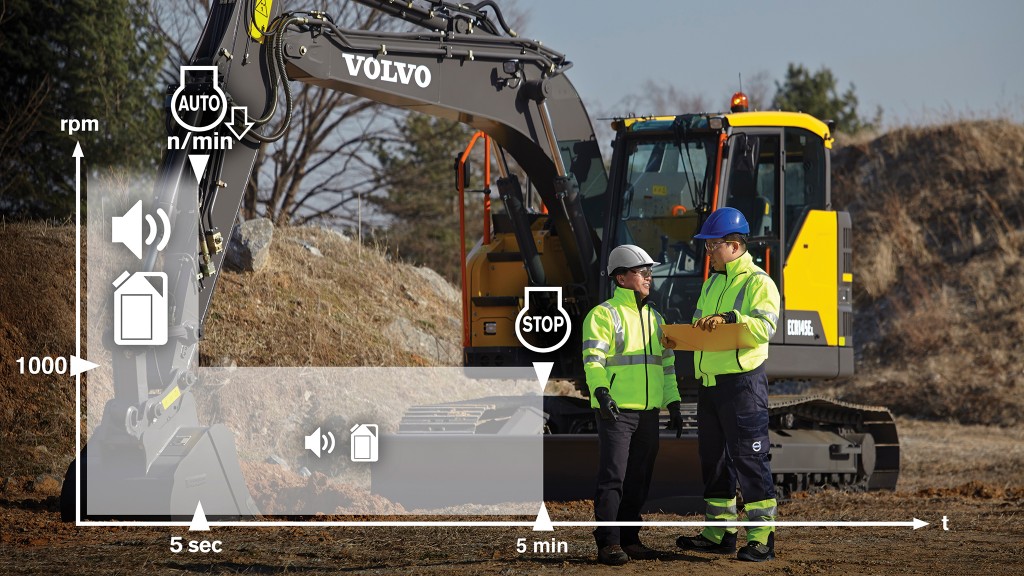
Proper cooldown: Before shutting off the engine, allow it to idle for three to five minutes to cool the turbocharger (especially after heavy use).
Set time limits via automatic features: Take advantage of automatic systems where engine speed is reduced to idle — or even shut down — when the machine and controls are inactive for a preset amount of time.
Handle cabin temperature control differently: Instead of running the engine solely to control cab temperature, you can equip machines with auxiliary power units (APUs) or use battery-powered climate control systems.
Keep filters clean: Regular maintenance, including the replacement of air and fuel filters, ensures that idling periods cause less damage. Reduce warm-up idling in cold weather: Use block heaters to warm the engine coolant before getting to work.
Use a low-temp diesel when needed: In cold environments, winter-grade diesel or fuel additives can prevent gelling and reduce the warm-up time needed.
Move from standing still to increasing revenue
It's clear that idle time has its place. But it's also clear that too much of it has serious consequences. Your dealer and/or OEM should be more than happy to speak with you about technologies that can help you identify idle time issues. Then, armed with data and knowledge, you can help your team make the necessary adjustments to get your idling percentages in check.